
Key takeaways
- inDrive, Pony.ai, and Nvidia plan robotaxi tests in Kazakhstan's Astana starting in the first half of 2027, beginning with a safety operator and progressing to autonomous operation.
- Pony.ai targets 3,500+ robotaxis across 20+ cities by end of 2026, partnering with multiple ride-hailing platforms including Uber to deploy autonomous fleets globally.
- inDrive uses a capital-light partnership strategy, contracting with existing autonomy providers rather than building proprietary self-driving technology.
- Astana's harsh winters provide a testing ground for autonomous systems in challenging weather conditions that most current trials overlook.
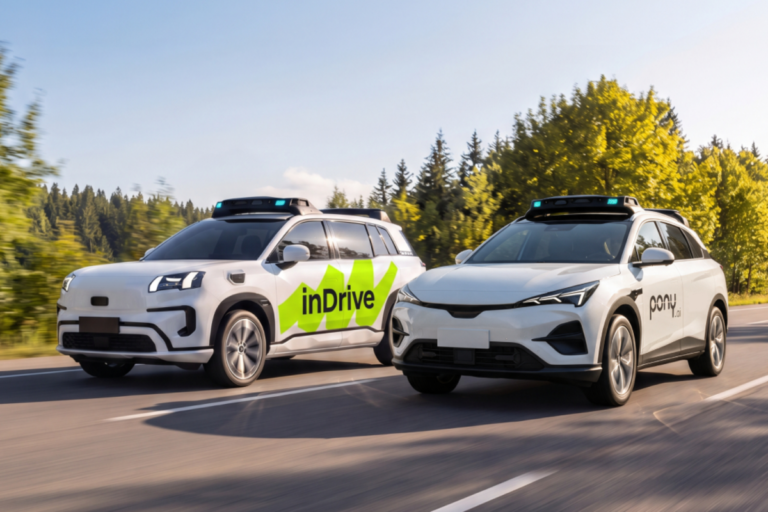
inDrive, the ride-hailing service known for enabling fare negotiation between passengers and drivers, is partnering with autonomous vehicle developer Pony.ai and Nvidia to launch robotaxi trials in Kazakhstan. The three companies announced a memorandum of understanding to begin testing in Astana during the first half of 2027.
Pony.ai will supply its Gen-7 robotaxis while Nvidia contributes its Hyperion platform and Halos safety system. inDrive will integrate the vehicles into its app and manage operations. Testing will start with a safety operator on board, progressing toward fully autonomous rides.
Kazakhstan as the Testing Ground
Kazakhstan represents an emerging market for robotaxi deployment beyond the United States and China. The government announced plans for autonomous taxi services in 2027, with trials beginning in Astana and two other cities. A regulatory framework permitting autonomous vehicles on specified public roads provides the legal foundation for testing.
Winter Weather and Market Advantages
Astana, with approximately 1.7 million residents, faces extended periods of snow and ice—conditions most autonomous vehicle trials avoid. Operating reliably in these winters validates technology for other cold-weather regions.
“Launching here will provide an important opportunity to evaluate autonomous driving technology in challenging winter conditions,” inDrive founder and CEO Arsen Tomsky said. “Success in Astana could offer valuable insights for expanding autonomous mobility to other locations facing similar challenges.”
Technology and the Capital-Light Model
Nvidia’s role reduces engineering complexity by bundling sensors and computing hardware into Hyperion, a unified autonomous driving stack. The platform includes Alpamayo, Nvidia’s model for autonomous vehicle behavior, plus tools for generating synthetic driving scenarios. This approach lowers costs, particularly in markets requiring affordability.
Ali Kani, Nvidia’s vice president of automotive, framed cost containment as essential in emerging regions. “Those savings are particularly relevant in emerging markets, where ride-hailing is already relatively affordable and autonomous services need to compete on cost,” he said.
inDrive CTO Yuri Misnik described the partnership as consistent with the company’s operational model. “Our approach is capital-light by design. We work with a range of partners in different markets, combining their expertise with ours to deliver a better customer experience.” Rather than developing proprietary autonomous technology, inDrive negotiates with established autonomy providers, reducing capital and time-to-market.
Pony.ai’s Global Expansion
Growing Fleet and Deployment Targets
Pony.ai targets operating more than 3,500 robotaxis across more than 20 cities worldwide by the end of 2026, up from 1,975 vehicles as of June 30. This deployment trajectory positions Pony.ai as a major supplier of autonomous fleets to ride-hailing partners globally.
Partnerships Beyond China
Pony.ai is not limiting collaboration to inDrive. Uber announced plans earlier this month to test Pony.ai robotaxis in London, alongside Wayve, a British autonomous driving startup receiving Uber investment. This arrangement reflects Pony.ai’s strategy of supplying autonomous vehicles to multiple platforms across different markets.
inDrive’s Broader Robotaxi Ambitions
Multiple Markets, Multiple Partners
The Kazakhstan pilot is not inDrive’s only autonomous initiative. In December 2025, inDrive signed a memorandum with Saudi Arabia’s AI Driver to explore deploying WeRide robotaxis in Riyadh, targeting a pilot in the first half of 2026. The timeline for that trial remains unclear.
This pattern—partnering with different autonomy providers across different markets—differentiates inDrive from competitors building internal autonomous capabilities. The strategy trades technological independence for faster deployment and lower capital intensity.
Misnik emphasized the regulatory dimension of robotaxi rollout. “We are also looking at a number of other markets for future deployments. One of the main requisites for successful launch in our view is a favorable and collaborative regulatory environment to facilitate safe and sustainable testing on the roads.”
Competitive Positioning
Uber remains the most active incumbent in global robotaxi trials, announcing tests across multiple cities and working with several autonomous vehicle developers, particularly in the Middle East. Uber’s scale and brand provide advantages in regulatory negotiations and consumer confidence.
inDrive’s cost-focused positioning and international presence—the company operates in more than 1,200 cities across 47 countries—create competitive pressure in markets prioritizing affordability.
A Template for Emerging Markets
The Kazakhstan announcement demonstrates a potential model for rapid robotaxi expansion in developing regions. Rather than geography-incumbent ride-hailing services building autonomous fleets, newer platforms can aggregate technology partnerships. Nvidia’s infrastructure approach, Pony.ai’s supply capacity, and inDrive’s operational scale shift the constraints from engineering and capital availability to regulatory approval and workforce transition.
Jensen Huang, Nvidia’s CEO, visited Kazakhstan on Friday, the day of the announcement, signaling the company’s strategic interest in positioning its autonomous stack as foundational technology for global robotaxi expansion.
Source: TechCrunch
Frequently Asked Questions
When will inDrive begin robotaxi tests in Kazakhstan?
Testing will begin in the first half of 2027 in Astana, initially with a safety operator on board before progressing to fully autonomous operation.
What role does each company play in the Kazakhstan robotaxi pilot?
Pony.ai supplies its Gen-7 robotaxis, Nvidia provides its Hyperion autonomous driving platform and Halos safety system, and inDrive integrates the vehicles into its ride-hailing app.
Does inDrive have robotaxi plans in other countries?
Yes, inDrive signed a December 2025 memorandum with Saudi Arabia's AI Driver to deploy WeRide robotaxis in Riyadh, targeting a pilot in the first half of 2026.
