
Key takeaways
- Physical AI—systems that perceive and act in unpredictable environments—dominates the October agenda, with sessions from SOSV HAX, Venrock, and aerospace specialists exploring execution layers and space applications.
- Anthropic engineers will share how they run AI agents in parallel for real engineering work, illustrating the gap between research and operational agent deployment in production.
- Conference programming emphasizes the economics shift from AI training to inference, with infrastructure and latency becoming competitive moats as foundation models commoditize.
- Fundraising strategy spans three dedicated breakout sessions covering investor targeting, mistakes that derail rounds, and how founders can transition from raising capital to allocating it post-exit.
TechCrunch Disrupt 2026 will gather over 10,000 founders, investors, and technology leaders at Moscone West in San Francisco on October 13-15 for three days focused on the next wave of startup innovation. The conference agenda, now revealed, highlights a conference increasingly centered on how artificial intelligence integrates into business operations, infrastructure economics, and the physical world.
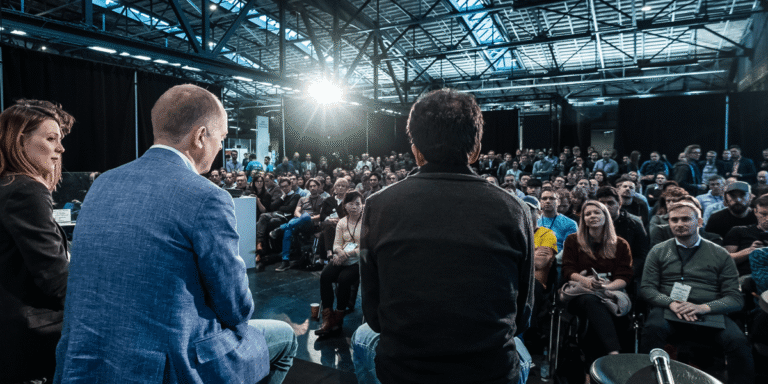
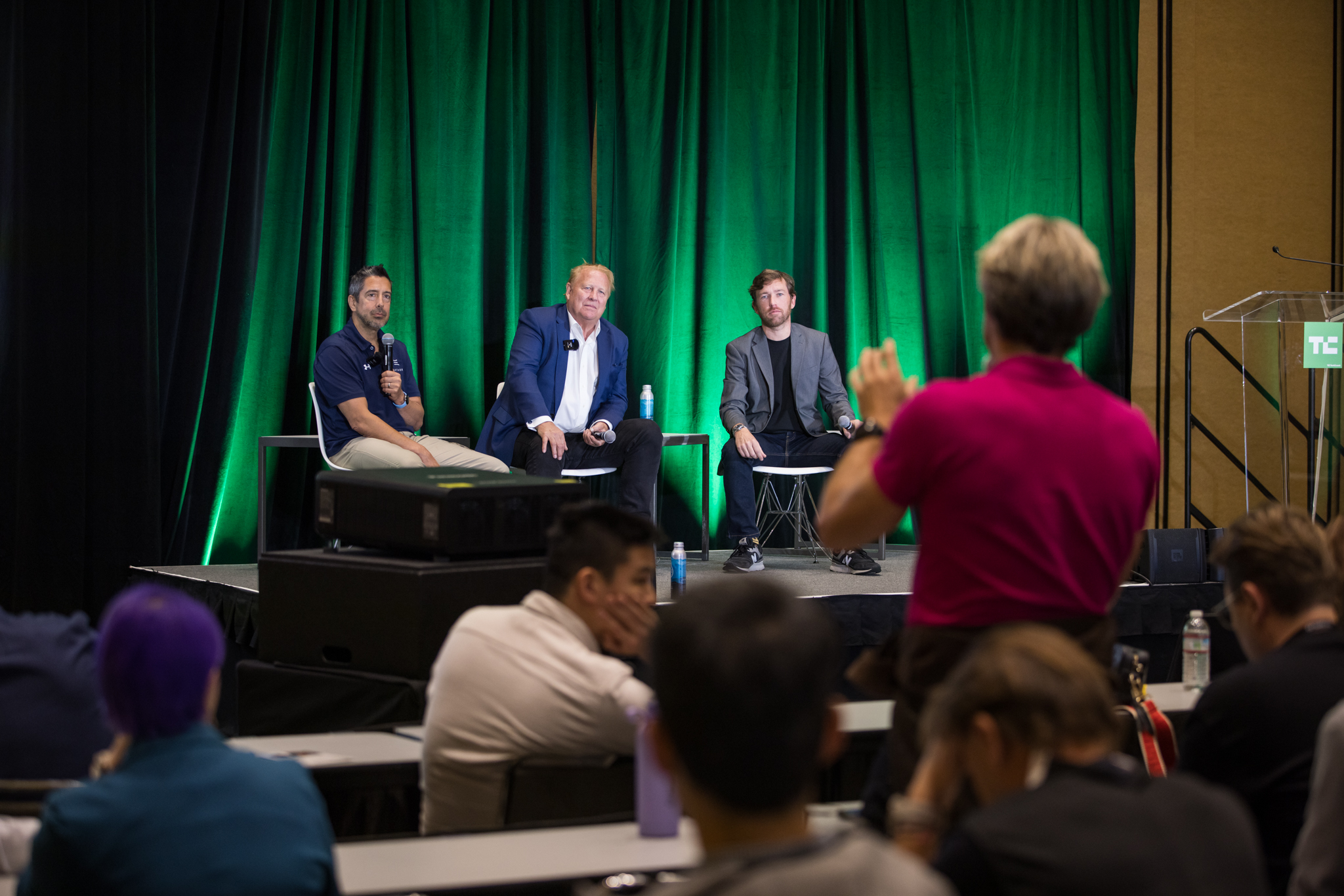
While main-stage programming draws crowds to keynotes, the breakout sessions are designed to host deeper conversations. Each 50-minute session pairs expert speakers with live audience questions, allowing founders and operators to probe specific challenges and walk away with practical insights. Rooms fill on a first-come, first-served basis with limited capacity.
Physical AI and Autonomous Systems
Physical AI—machines that perceive, reason, and act in unpredictable real-world environments—emerges as a defining theme across multiple sessions. Susan Schofer, Partner and Chief Science Officer at SOSV HAX, and Duncan Turner, General Partner and Managing Director at SOSV HAX, will explore what actually qualifies as physical AI, the distinct engineering challenges it poses, and what venture investors prioritize when evaluating companies in the category.
Closing the Loop Between Perception and Action
A separate breakout session brings together Ethan Batraski from Venrock, Ivan Poupyrev, Founder and CEO of Archetype AI, and Ian Rountree from Cantos to examine the execution layer of physical AI systems. The focus centers on the chain linking perception to decision-making to action to verification, with particular attention to why companies that reliably execute this cycle could develop substantial competitive advantages in industrial applications.
Space Applications and Data Processing
Dr. Brian Cameron, Interim Chief Technology Officer at The Aerospace Corporation, Bosco Lai, CEO of Little Place Labs, and Shawn Sloan, Corporate Fellow for Artificial Intelligence at The Aerospace Corporation, will connect AI challenges in space to problems familiar to technology builders. High-volume data streams, autonomous decision-making in real-time, and complex agent systems appear both in aerospace and in commercial AI applications, opening pathways that space-focused companies and mainstream startups can explore.
AI Agents in Production Workflows
Anthropic Members of Technical Staff Steve Androulakis and Sachin Malhotra will discuss how companies that build AI for a living deploy multiple Claude agents in parallel, allocate actual engineering work to them, review results, manage failures, and integrate agents into daily operations. Their session illustrates the gap between academic agent research and the operational realities of running agent systems inside organizations.
Scalable Human Evaluation
As AI systems take on higher-stakes decisions, raw accuracy falls short. A breakout session led by Goldfarb, drawing on experience with misinformation, online safety, and work alongside foundation-model developers, explores how expert human judgment can transform into scalable evaluation frameworks and what building reliable AI systems demands.
Infrastructure Economics and the Inference Shift
The economics of artificial intelligence are rebalancing from training-focused spending to inference-heavy operations. Hagay Lupesko, SVP of AI Cloud at Cerebras Systems, and Rudina Seseri, Founder and Managing Partner of Glasswing Ventures, will examine how defensibility erodes when foundation models become commodities, why latency emerges as a product differentiator, and what those shifts mean for infrastructure architecture, startup unit economics, and investor expectations going forward.
Fundraising Strategy and Company Building
Multiple sessions address the mechanics of building and funding startups in an AI-accelerated environment. One breakout covers the full fundraising cycle from both founder and investor perspectives, including investor targeting, relationship development, outreach pacing, cap table management, data room preparation, and due diligence workflows.
Using AI for Founder Decision-Making
Rumman Chowdhury, CEO and Co-founder of Humane Intelligence, Payal Kadakia, Founder of ClassPass, Cassie Kozyrkov, Founder of Kozyr, and Holly Ransom, CEO of Emergent, will explore how the underlying toolkit for company building has shifted with AI tooling. The session examines how founders can leverage AI to improve decisions and accelerate execution while recognizing where bias, human judgment, and the interpersonal dimensions of leadership remain irreplaceable.
From Fundraising to Allocating Capital
Bruce K Lee, CEO and Founder of Keebeck Wealth Management, and Abhi Tiwari, Co-founder and General Partner of Blank Ventures, will address what changes when entrepreneurs transition from raising capital to deploying it as investors, and why founders might benefit from planning their post-exit strategy long before a transaction occurs.
Avoiding Common Fundraising Mistakes
A healthcare-focused fundraising session with Dr. Irena King, Founder and CEO of Surgicure Technologies, Dr. Richard Munassi, Accelerator Managing Director and Chief Strategy Officer at Tampa Bay Wave, Ashley Paston, Partner at General Catalyst, and Emily Zhen, Principal at HealthQuest Capital, will dissect typical errors that derail funding rounds, from positioning missteps to execution breakdowns, with practical frameworks for moving from pitch to close.
Growth, Marketing, and Distribution
A session featuring Hostinger examples will examine how AI compresses the timeline between spotting market opportunities and acting on them. The discussion covers identifying underpriced distribution channels, tightening feedback loops between market signals and product launches, accelerating experimentation, and operationalizing agentic marketing workflows to boost growth.
Leadership and Organizational Alignment
Khedawala will explore how leaders strengthen cross-team alignment as organizations scale, identify breakdowns before they compound, and design systems that sustain accountability and high performance under growth pressure. The emphasis remains on the human dimensions of scaling, even as automation reshapes work itself.
Source: TechCrunch
Frequently Asked Questions
When and where does TechCrunch Disrupt 2026 take place?
TechCrunch Disrupt 2026 runs October 13-15 at Moscone West in San Francisco, with an expected attendance of over 10,000 founders, investors, and technology leaders.
What format are the breakout sessions, and how do they differ from main-stage programming?
Breakout sessions are 50-minute discussions that combine expert speakers with live audience questions, allowing attendees to explore specific problems more deeply and ask direct questions. Rooms have limited capacity and operate on a first-come, first-served basis.
Which speakers from Anthropic will discuss AI agents at the conference?
Steve Androulakis and Sachin Malhotra, both Members of Technical Staff at Anthropic, will demonstrate how they run multiple Claude agents in parallel for real engineering work and integrate agents into daily operations.
