
Key takeaways
- Hang Ten Systems raised $85M in two seed rounds within five weeks, with founder Vishal Sikka's enterprise software approach gaining traction with 21 major enterprises including Saudi Aramco and Fresenius Kabi.
- The startup delivers production software using 2–4 person teams for work that traditionally required 30 employees, claiming 10-fold improvements in cost, speed, or both for regulated enterprise projects.
- Hang Ten positions itself as independent from underlying AI platforms, differentiating from both AI model makers selling directly to enterprises and traditional consulting firms adding generative AI capabilities.
- Rapid funding and acquisition offers in the first four months reflect intense demand to automate enterprise software delivery, though many deals involve new projects previously deferred rather than displacement of existing vendors.
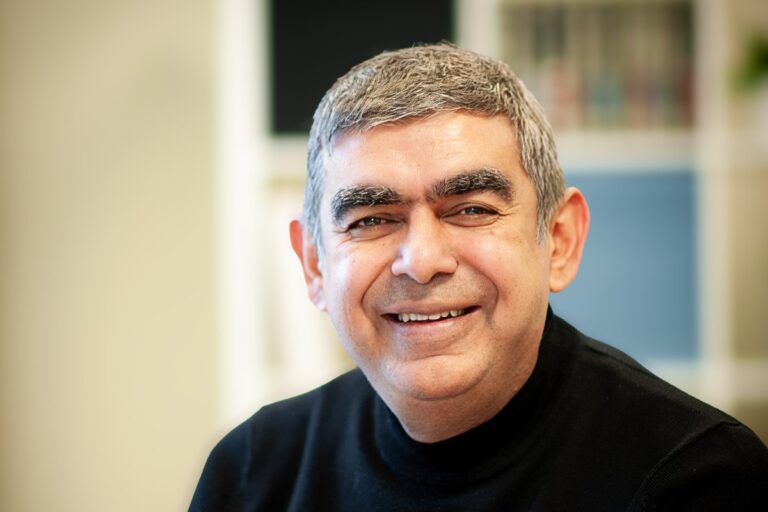
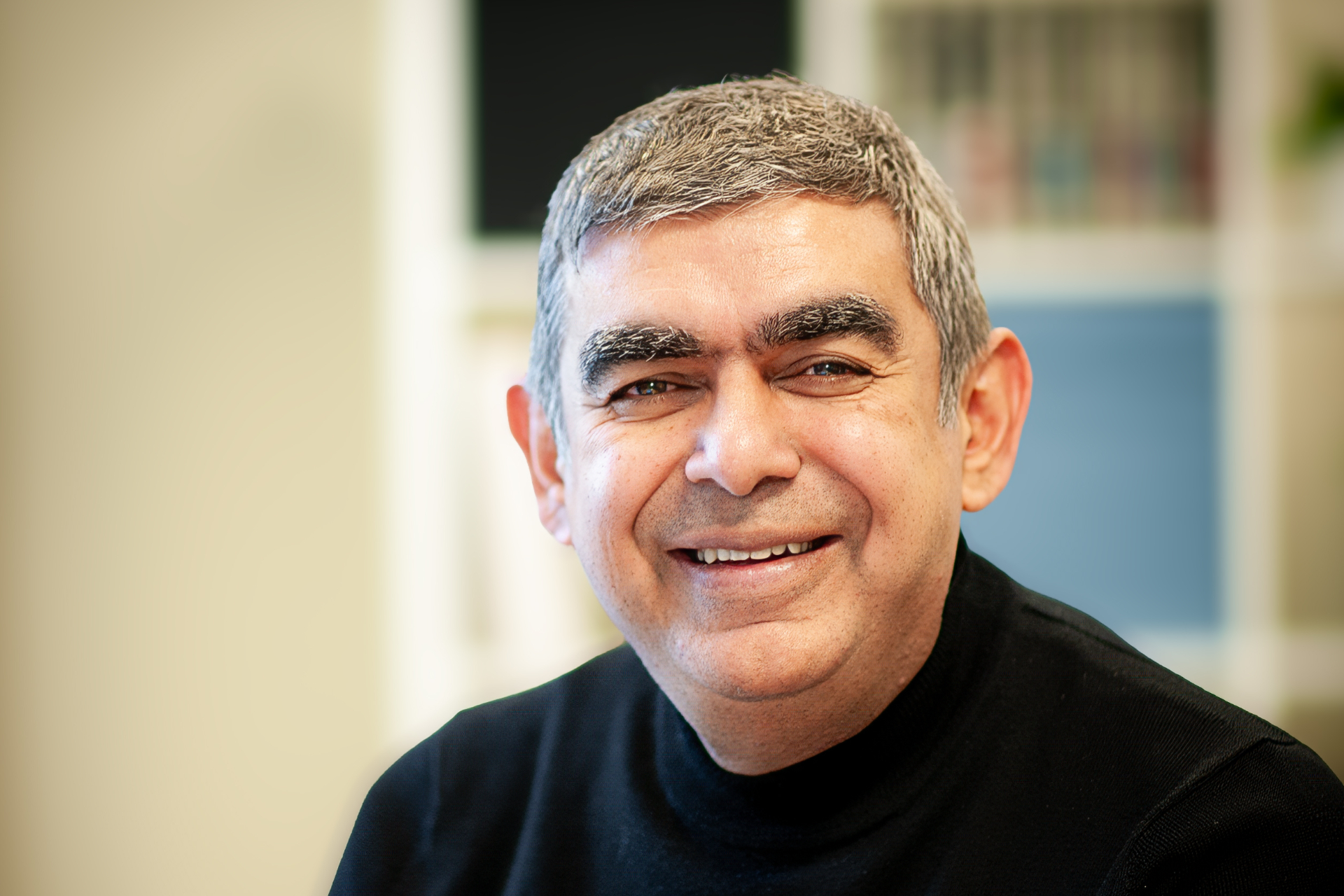
Hang Ten Systems, the AI startup founded by former Infosys CEO Vishal Sikka in May, has transformed a successful seed round into a rapid follow-up, crossing $85 million in total funding and demonstrating the acceleration that AI enterprise software is currently experiencing.
From Seed to $85 Million in Five Weeks
The Rapid Funding Cycle
The company’s initial seed round of $32 million closed quickly, but the follow-up arrived with striking speed. The second seed round of $53 million closed just five weeks later, compressing what are typically separate funding cycles into a matter of weeks. For early-stage companies, this pace suggests that the fundraising environment for AI-focused enterprise software remains robust, and that investor conviction about Hang Ten’s market opportunity has remained strong enough to revisit the startup in short order.
The swift capital injection follows customer momentum that prompted the new investors to approach the company. Xora, Temasek’s early-stage investment platform leading the round, saw Hang Ten’s early customer wins and recognized an opportunity to introduce the startup to other companies in Temasek’s broader portfolio. The move reflects how investor syndication increasingly happens through recognition of traction metrics rather than traditional networking alone.
The Investor Consortium
Mayfield, which led the initial $32 million round, participated again in the follow-up, signaling continued confidence. The list of new and returning investors reads as a who’s who of technology and venture leadership: Aramco Ventures, bringing the oil-to-tech conglomerate’s perspective; Intel CEO Lip-Bu Tan in a personal capacity; Micron CEO Sanjay Mehrotra; and Yahoo co-founder Jerry Yang, who has taken a board seat.
The presence of sitting CEOs from semiconductor companies investing in a software development startup reflects how the AI wave is reshaping capital allocation across hardware and software. Intel and Micron stand to benefit from increased compute demand driven by AI workloads, yet both are backing a services company, suggesting they see Hang Ten’s growth as part of the broader infrastructure opportunity. Sikka declined to disclose the company’s valuation, though he noted that the second round represented an upward revision from the first.
Redefining Enterprise Software Development
From Code to Requirements and Validation
Hang Ten’s core thesis is that AI fundamentally changes how large enterprises build and maintain software systems. Rather than focusing engineering effort on writing code, the company argues, the lever shifts toward defining clear requirements and validating that systems perform as intended. Sikka framed the shift in an interview with TechCrunch: “The build part itself has basically become close to zero marginal cost, close to zero time.”
This philosophy drives every aspect of Hang Ten’s offering. The startup targets enterprises with annual revenue exceeding $10 billion, advising them on AI strategy while simultaneously building and modernizing software systems. The market it is pursuing—large enterprises making fundamental technology shifts—has historically been dominated by systems integrators and traditional consulting firms, which typically employ hundreds or thousands of engineers on multi-year contracts. Hang Ten is betting that AI reduces the team size required to deliver equivalent or superior results, fundamentally altering the unit economics of enterprise software delivery.
The Hobie Framework and Reusable Skills
Rather than approaching each engagement as a bespoke project, the company developed a proprietary framework called Hobie that packages reusable AI “skills” designed for regulated industries and complex enterprise environments. This abstraction matters significantly. Regulated industries—pharmaceuticals, energy, finance—require extensive validation, audit trails, and proof of system behavior. A framework that can embed those requirements into reusable patterns means that the cost and timeline for a second or third engagement in the same regulated sector becomes substantially lower than the first.
Customer Proof Points in Four Months
Deal Velocity and Engagement Scale
The company’s customer list suggests that the market is receptive to its pitch. In four months of operation, Hang Ten has engaged with 21 major enterprises, spanning the United States, Europe, the Middle East, and Asia. Three customers have been made public: Fresenius Kabi, a healthcare and nutrition company; Saudi Aramco, the state-owned oil giant; and Siemens Energy, the power and gas division of the German industrial conglomerate.
One of the most striking elements of Hang Ten’s narrative is the speed at which deals close. Within 25 days of an initial meeting with one customer, the company signed a multimillion-dollar contract to build a mission-critical software system. Sikka stated that he had never seen enterprise deals move at that velocity in his prior career. Beyond the headline-grabbing speed, the company has secured multiple seven-figure contracts and is currently pursuing eight-figure deals, suggesting that customers are prepared to make significant commitments for mission-critical systems.
Replacing Vendors and Unlocking Deferred Projects
The makeup of Hang Ten’s customer base reveals two distinct categories of work: some engagements involve replacing incumbent providers like systems integrators or consulting firms that previously held the relationship, while others represent new projects that customers had previously deferred, possibly due to cost or timeline constraints. More than half of the current opportunities involve deferred projects rather than work taken from existing vendors. This composition matters for business sustainability. If most growth came from displacement of incumbents, the market would be zero-sum. Instead, Hang Ten appears to be unlocking a set of software projects that the traditional consulting model made uneconomical for large enterprises to fund.
Competing With Incumbents and Platforms
Hang Ten enters a market with multiple powerful competitors, each approaching enterprise AI from a different angle. OpenAI and Anthropic, the leading AI model developers, are expanding their enterprise offerings directly. Traditional consulting firms are racing to embed generative AI into existing service lines. Meanwhile, specialized AI consultancies are proliferating.
Sikka has articulated a positioning that differentiates Hang Ten from all three: “Enterprises still need trusted partners who are independent of the underlying platform and who work with and solely in the interest of the enterprise.” This claim of independence from AI platform providers matters in a market where OpenAI and Anthropic also sell services directly to enterprises. An enterprise choosing Hang Ten does not risk vendor lock-in to a particular AI model, in theory.
The company’s technical differentiation centers on its ability to deliver production software rather than proofs of concept, according to CTO Sanjay Rajagopalan. The distinction matters significantly: POCs are exploratory and non-binding; production systems are what enterprises actually run their business on. Rajagopalan noted that Hang Ten can accomplish with two to four engineers what previously required 30 people, and promises customers a 10-fold improvement in cost, speed, or some combination, though final quality checks and certification remain the customer’s or a third party’s responsibility.
Building and Expanding Globally
Hang Ten currently operates with 20 to 25 employees across the United States, the Middle East, and Australia. The new funding will fuel expansion of engineering, consulting, and sales teams, with hiring planned for Europe and India. The geographic distribution is already global, but focused on time zones that allow for service delivery to existing and prospective customer bases.
The company has already received unsolicited acquisition offers from major corporations, Sikka disclosed, though Hang Ten has declined them in order to focus on building the business. For a company at the four-month mark, acquisition interest from established technology companies reflects both the visibility of Hang Ten’s customer wins and the apparent desperation of larger organizations to acquire capability in AI-driven software development.
From Infosys to AI Enterprise Software
Sikka’s entrepreneurial resume includes a notable prior venture. In 2019, after leaving Infosys in 2017, he co-founded VianAI, an enterprise AI company that raised $50 million in seed funding and later secured $140 million in a 2021 round led by SoftBank Vision Fund 2. Sikka departed VianAI in April 2026, according to his LinkedIn profile, with the company described as being in the midst of a transaction.
The progression from Infosys to VianAI to Hang Ten shows a narrowing of focus with each iteration. Infosys is a global systems integrator with over 300,000 employees. VianAI concentrated on enterprise AI broadly. Hang Ten narrows further to AI-driven software development and modernization, betting that a focused position in an expanding market can outcompete broader players. The startup takes its name from the surfing maneuver in which a surfer rides with all ten toes over the front of the board, reflecting Sikka’s ambition to help enterprises ride what he called “probably the biggest wave of our lives” in artificial intelligence.
Frequently Asked Questions
Who founded Hang Ten Systems and when?
Vishal Sikka, former CEO of Infosys, founded Hang Ten Systems in May 2026. Sikka previously co-founded VianAI in 2019, which raised $190 million in two rounds before his departure in April 2026.
How much funding did Hang Ten raise and from whom?
Hang Ten raised $85 million total: $32 million in the initial seed round led by Mayfield, and $53 million in a second round led by Temasek's Xora platform. Other investors include Aramco Ventures, Intel CEO Lip-Bu Tan, Micron CEO Sanjay Mehrotra, and Yahoo co-founder Jerry Yang.
Which enterprises is Hang Ten working with?
Hang Ten is engaged with 21 major enterprises globally spanning the United States, Europe, the Middle East, and Asia. Named customers include Fresenius Kabi, Saudi Aramco, and Siemens Energy. The company has signed multiple seven-figure contracts and pursues eight-figure deals, with one customer signing a multimillion-dollar contract within 25 days of first meeting.
