
Key takeaways
- Insight Partners, managing $90 billion in assets, pursues diversification while other VCs concentrate bets on OpenAI and Anthropic.
- Valuations are rising at 2021 levels; Parekh's response is smaller checks early ($20–25 million vs. $500 million) with the flexibility to double down on winners.
- Parekh sees AI's capacity to scale healthcare—identifying hidden conditions like heart disease in patient records—as outweighing theoretical safety concerns.
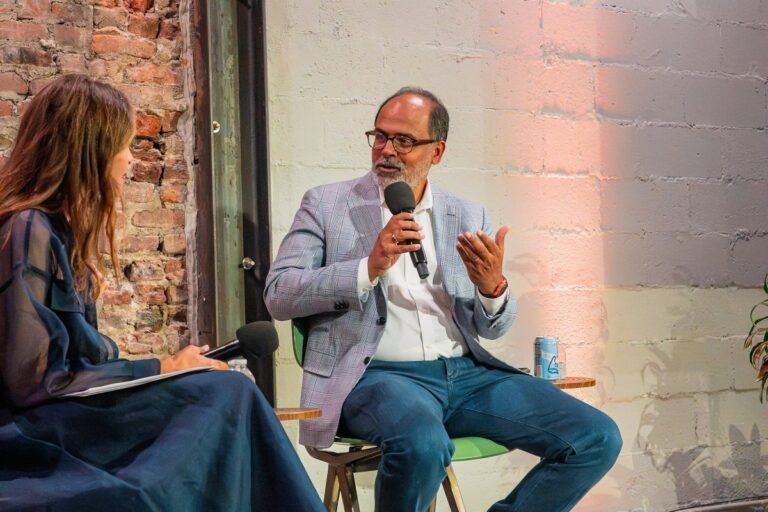
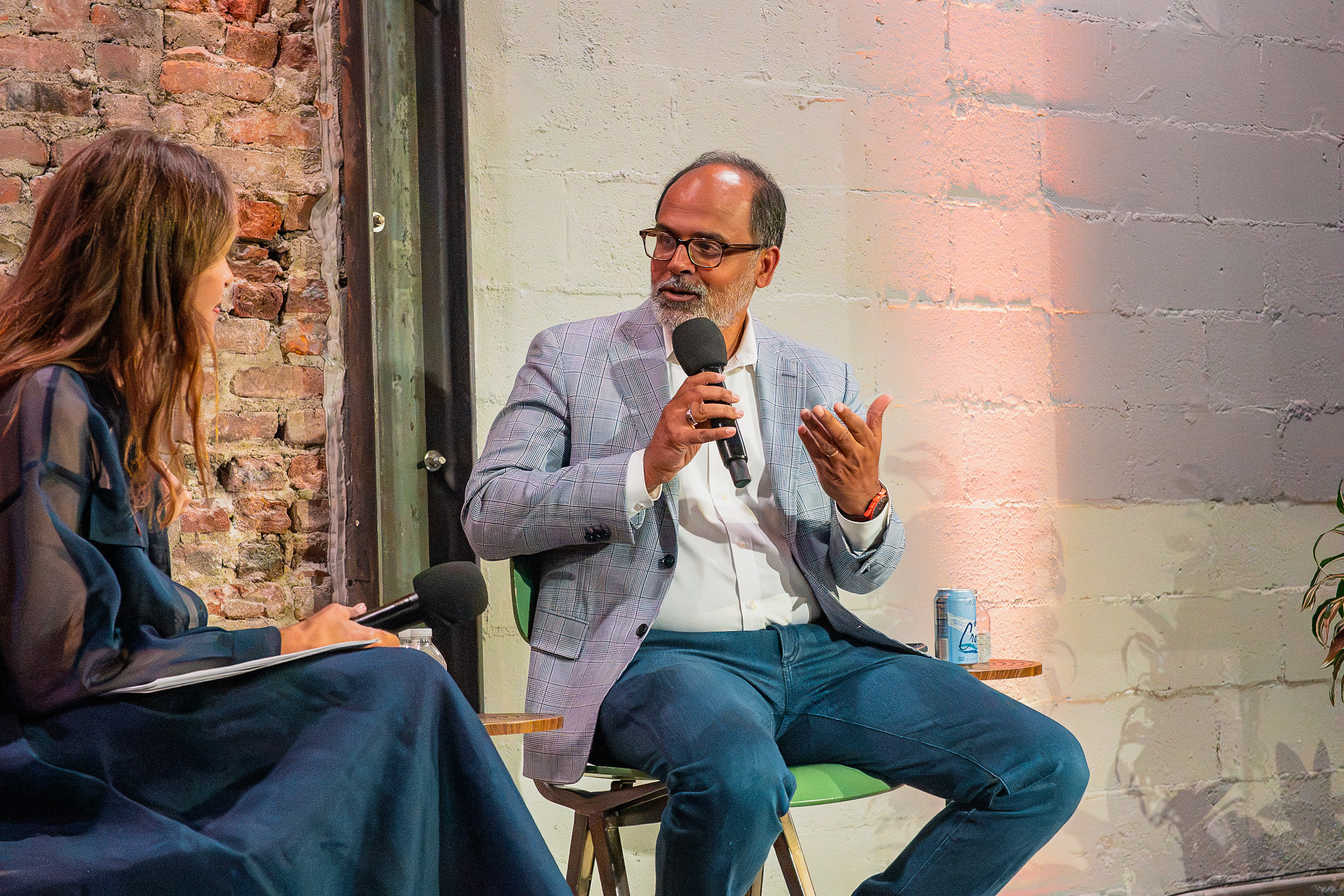
Deven Parekh has spent 26 years co-running Insight Partners, one of the venture industry’s heavyweights, managing $90 billion in assets under management. At TechCrunch’s StrictlyVC event in New York, Parekh offered a contrasting view to some of his peers in venture—a belief that the upside of artificial intelligence far outweighs the regulatory and safety concerns that have animated recent criticism.
The Case for AI Optimism
The optimism extends beyond abstract faith. Parekh sits on the board of NYU Langone, where he has direct exposure to how AI is reshaping medicine. When asked about risks from advanced AI systems, he pointed to concrete examples rather than hypothetical fears. AI systems analyzing patient data can surface hidden health risks in ways that change outcomes: looking at 50 million patient records, AI can tell a person walking in for something unrelated that they face a 25% chance of a heart attack. That kind of diagnostic power, multiplied across a healthcare system straining under an aging population and a shortage of medical professionals, represents the kind of problem only AI can solve at scale.
Where Risks Meet Progress
The medical angle shifted the conversation away from theoretical risks. Parekh acknowledged the genuine hazards—a non-state actor obtaining an open-source model to create biological weapons, next-generation drone warfare—but framed them as generational risks that every era has faced. His argument was pragmatic: living standards have historically risen despite new risks emerging with each technological wave. This generation needs AI to make healthcare work. The alternative is worse.
The Valuation Trap and Smaller Checks
Insight’s $90 billion in assets and quiet profile—Parekh noted that the firm deliberately avoids the podcast and social media circuit that occupies many VCs—allows a different approach to deployment. That approach is now centered on a concern: valuations are rising at a pace not seen since 2021, a period that “didn’t end well.”
The Data Problem in Fast Rounds
Parekh identified a structural problem in how fast capital is moving. Follow-on rounds normally bring more data, which justifies a higher valuation as investors pay more for lower risk. Today, rounds close so quickly that there is almost no incremental data between them. Founders and investors pay higher prices without reducing risk. The logical response, in Parekh’s view, is to go earlier and make smaller bets.
Why Smaller Checks Compound Better
Insight has shifted toward checks of $20–25 million rather than $500 million. The advantage compounds when a bet works. Wiz, the cloud security company, received a Series A from Insight and continued to get checks as it grew. That cumulative approach meant Insight’s overall gain was much larger than if the firm had stopped at the Series A. If Wiz had failed, a $20–25 million check barely dents a fund of Insight’s scale. The math is simpler: make many small bets early, double down on the ones showing inflection, and let the losers be losers.
Where Talent Concentrates
Parekh’s 23-year-old son is a VC himself, recently moving to San Francisco with the reasoning that you cannot invest in AI infrastructure without being there. AI infrastructure talent is concentrated in the Bay Area in ways that feel different from other sectors. But concentration is not uniform. Ramp, a financial services startup, drew talent pools in New York. Legora, an AI legal-tech company, had its founder in Stockholm. Insight lost that deal to General Catalyst. Parekh was philosophical about the loss, saying General Catalyst “sold their value proposition better than we sold ours that time.” The broader point was that talent density varies by vertical, making vertical AI investing more geographically diverse than pure AI infrastructure plays.
Investing in Rivals
Insight’s stakes in both OpenAI and Anthropic—rival companies increasingly seen as the two poles of frontier AI—were once taboo in venture. The internal debate was less about conflict and more about whether they should have invested earlier. Stage matters enormously. Khosla Ventures led OpenAI’s Series A and could not have meaningfully invested in Anthropic afterward. Similarly, if Insight had led Anthropic’s Series A, they likely couldn’t have done OpenAI. At later stages, off the board, you are “just buying a great stock.” OpenAI became the dominant consumer play while Anthropic positioned itself for enterprise. Once both companies needed $30–$100 billion, they stopped dictating exclusivity to investors. At the Series A and B stages, Insight maintains information-sharing restrictions and avoids directly competing companies, though some founders are sensitive even to a 2% revenue overlap.
The IPO Wave and What Trillion-Dollar Companies Mean
Anthropic will likely file to go public soon, with OpenAI presumably following. Both will join SpaceX in a cohort of companies going public within six to eight months, each north of a trillion dollars in market cap. Parekh suggested the market absorbed SpaceX just fine, and there’s no reason to think it won’t absorb Anthropic and OpenAI either.
The real question is what bar these IPOs set for the next tier of companies. If a public-market investor watched something grow from zero to $65 billion in four years, a trajectory of “double, double, triple, triple” no longer looks exciting. That 10x growth rate cannot continue forever. Eventually, Parekh noted, even these companies become normal-growth companies, and that is what public markets are designed for. Expect more IPOs in the next 18 months.
Finding Winners in a Portfolio
Insight conducts portfolio reviews examining 300 companies over three days, not just tracking big positions but hunting for inflection points. Wonderful, an enterprise AI agent platform, was created less than two years ago and reached a $5 billion valuation after two rounds from Insight. A counterpoint is Armis, a security company. Insight lost the initial deal to Sequoia but kept the relationship alive with a $5 million check from an $11 billion fund. Eighteen months later, Insight bought out the entire cap table, including Sequoia’s stake, for a nine-figure check. Insight then sold the company to ServiceNow this year for $7 billion. Some returns come from small checks, others from big ones. The goal is finding the best founders in the best markets.
Frequently Asked Questions
Why does Insight Partners invest in both OpenAI and Anthropic despite them being rivals?
At early funding stages, Insight maintains information-sharing restrictions and avoids directly competing companies. Once at later rounds, both companies needed $30–$100 billion and stopped enforcing exclusivity. Insight saw OpenAI as the dominant consumer play and Anthropic as having a clear enterprise strategy.
What is Insight's response to valuations rising like 2021?
Parekh writes smaller checks ($20–25 million instead of $500 million) earlier in a company's life and doubles down on winners. This approach reduces risk per bet and lets individual failures barely impact the fund.
When will Anthropic and OpenAI go public?
Anthropic will likely file soon, joining SpaceX and OpenAI in a cohort going public within six to eight months, each with a market cap over $1 trillion. Parekh expects more frontier AI IPOs over the next 18 months as these companies eventually become normal-growth companies needing public markets.
