
Key takeaways
- Clément Delangue pledged intensified open-source AI efforts after Nvidia CEO Jensen Huang's departure as the $12.9 billion Hugging Face acquisition faces regulatory scrutiny.
- Huang had championed open-source AI through a 25-company policy letter in July and backed support with a $6 billion Poolside investment plus expanded Nemotron and Bolt models.
- The U.S. Department of Justice began inquiring in October about whether the acquisition threatens AI competition, with the deal scheduled to close in the first half of 2027.
- Uncertainty surrounds how interim CEO Collette Kress will approach open-source AI compared to Huang, who became the public face of Nvidia's open-source commitments.
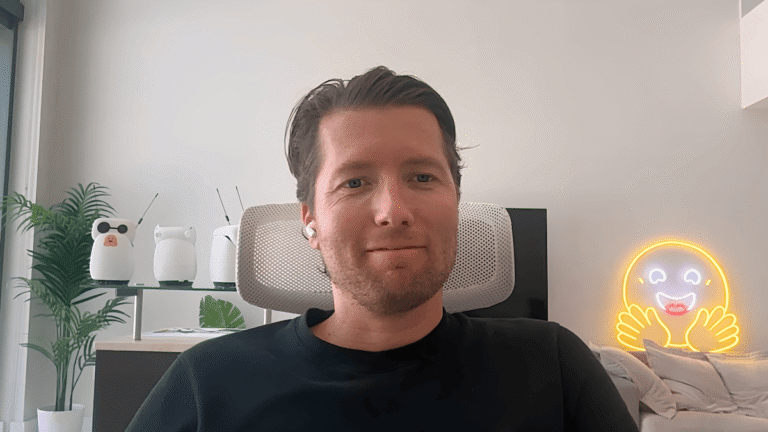
Clément Delangue, chief executive of Hugging Face, responded to Jensen Huang’s departure from Nvidia by posting on X Thursday that the company would redouble its commitment to open-source artificial intelligence, even as uncertainty clouds the future of its $12.9 billion acquisition by the chipmaker.
“This whole thing sucks, and I wish none of it had happened. It’s a really sad day! But I want to make one thing clear: we’ll keep fighting for open-source AI, harder than ever,” Delangue wrote. “This is too important to slow down now. Let’s go!”
Delangue’s statement reflects anxiety within the open-source AI community that Huang’s exit could reshape how Nvidia approaches open-weight models—AI systems that users can download, modify, and run on their own hardware without relying on a company’s cloud service. During his tenure as CEO, Huang had become the public face of Nvidia’s commitment to supporting and promoting such models.
Huang’s Departure Raises Concerns About Open-Source Commitment
The timing of Huang’s exit is significant because he had emerged as a high-profile advocate for open-source AI in both corporate settings and public statements. His departure leaves questions about how Interim CEO Collette Kress will approach the company’s stated commitment to keep Hugging Face open to the community.
Years of Public Advocacy for Open-Source Models
The July Policy Letter
Huang’s most visible display of support for open-source came in July, when he published a policy letter on X urging the U.S. government to avoid overregulating open-weight AI models. The letter was signed by 25 companies, including Microsoft, Meta, Hugging Face, IBM, and Palantir, representing a coalition united around the principle that open models strengthen the broader AI industry.
The letter outlined several rationales for this position. Open-weight models, according to the signatories, increase security and safety by allowing independent review of code, accelerate innovation by enabling broader participation in AI development, prevent customers from becoming locked into a single vendor, and increase the geographic spread of AI capabilities—what the letter termed “enabling sovereignty.”
“Open models strengthen safety and cybersecurity, accelerate innovation and diffusion, and enable sovereignty,” Huang wrote in his post.
Public Statements and Leadership
Beyond the policy letter, Huang had promoted open-source AI prominently at the Consumer Electronics Show in January, where his keynote address highlighted how open-source models have “really revolutionized artificial intelligence” and positioned them as central to the future of the industry.
Strategic Investments Backing the Open-Source Vision
Huang’s advocacy for open-source extended into substantial financial commitments. In August, Nvidia announced a $6 billion deal with Poolside, a coding startup, to build out an open AI ecosystem intended to help the United States compete against Chinese AI companies including DeepSeek and Kimi K3.
That same month, Nvidia expanded its Nemotron family of open-weight models with a new 120-billion-parameter model aimed at enterprise customers building AI agents, as well as two lightweight Bolt models designed to run on personal computers and laptops. These releases underscored Huang’s belief that open-source models should be accessible across different computing environments and use cases.
The Hugging Face Acquisition Under Regulatory Review
Deal Size and Ranking
Nvidia announced its plan to acquire Hugging Face in September, paying $12.9 billion for the platform that hosts one of the largest online repositories of AI models. The acquisition ranks as Nvidia’s second-largest ever, trailing only its acquisition of assets from Groq for $20 billion in December 2025. For Hugging Face users and the broader open-source community, the acquisition raised a complex question: would Nvidia’s ownership alter the platform’s commitment to hosting open-source models?
Nvidia responded by committing to preserve Hugging Face’s open support, ensuring the platform would continue to function as a hub for open-source model distribution. However, acquiring Hugging Face would grant Nvidia control over one of the most significant distribution channels for open-source AI models, giving the company outsized influence over which models reach the widest audiences.
Regulatory Scrutiny from the DOJ
The acquisition’s competitive implications drew government attention. The U.S. Department of Justice began making inquiries in October about how the deal might affect competition in the AI market, according to Reuters reporting. The acquisition is scheduled to close in the first half of 2027, leaving time for regulatory review and potential modifications to how Nvidia integrates Hugging Face.
Uncertain Leadership and the Future of Open-Source Support
Delangue’s statement Thursday suggested that Hugging Face intends to maintain its focus on open-source AI regardless of how Nvidia’s corporate priorities may shift under new leadership. But questions remain about whether a company led by Kress—an executive without Huang’s visible open-source advocacy—will continue to balance proprietary interests with public commitments to the open-source community. Those questions will persist until the acquisition closes and the shape of the combined company becomes clear.
Source: TechCrunch
Frequently Asked Questions
Why did Clément Delangue post about Huang's departure?
Delangue expressed concern that Huang's exit, as a visible open-source advocate, could shift Nvidia's approach to open-source AI. He pledged Hugging Face would intensify its open-source efforts regardless of how Nvidia's corporate priorities change.
How much did Nvidia plan to pay for Hugging Face, and how does it rank among Nvidia acquisitions?
Nvidia announced a $12.9 billion acquisition of Hugging Face in September, making it the company's second-largest acquisition behind its $20 billion purchase of Groq's assets in December 2025.
What regulatory concerns has the Hugging Face acquisition raised?
The U.S. Department of Justice began inquiries in October about whether the acquisition threatens competition, since Hugging Face controls a major distribution channel for open-source AI models. The deal is scheduled to close in the first half of 2027.
