
Key takeaways
- Microsoft's code of conduct establishes hard prohibitions on cyberattacks, nuclear weapons, and deepfakes, plus rules against AI systems evading human control.
- The company predicts superintelligent AI will surpass human performance within a decade, positioning the code as essential infrastructure for alignment.
- Microsoft joins Anthropic, OpenAI, and xAI in deliberately pacing frontier AI progress, with CEO Satya Nadella endorsing embedded safety researchers within AI labs.
Microsoft has released a comprehensive code of conduct designed to restrict AI models from engaging in harmful behaviors, ranging from cyberattacks and deepfake production to measures that could undermine human oversight. The document represents the company’s effort to implement practical safety constraints as the AI industry increasingly focuses on alignment—ensuring that powerful AI systems remain controllable and beneficial.
The code of conduct establishes a hierarchy where each model operates under an overarching set of rules that supersede individual user preferences or specific task requirements. Within this framework, Microsoft designates certain behaviors as absolute constraints, including prohibitions on cyberattacks, nuclear weapons development, and deepfake production. Beyond these hard lines, the document includes broader provisions designed to prevent scenarios where AI models could escape human control or become unreliable to direct and shut down.
The Superintelligence Problem and Core Principles
The document’s foundation rests on the prediction that superintelligent AI systems will surpass human performance in most tasks within the next decade. Responding to this prospect, Microsoft frames the code of conduct as addressing what it calls one of humanity’s greatest challenges: “Containing, controlling, and aligning such a powerful force.” The company emphasizes that clarity about why these systems are being built and how they will be controlled represents a prerequisite to safe development.
From Abstract Principles to Constraints
Microsoft articulates two overarching principles that should guide AI development. The first holds that AI systems should support human flourishing rather than replace human capabilities. The second commits to accelerating human flourishing as a design goal. These principles then translate into specific safety constraints meant to operationalize them. Without concrete rules tied to these principles, Microsoft acknowledges, the stated values would remain aspirational rather than enforceable.
The hierarchy matters: each model has a code of conduct that cannot be overridden by user requests or specific operational needs. This design ensures that even if a user asks an AI system to hack a network or produce a deepfake, the model’s foundational rules take precedence.
The Evasion Problem
One particular concern shapes the broader safety provisions: the possibility that sophisticated AI systems could become self-reinforcing or deceptive in ways that prevent humans from reliably modifying or terminating them. The code of conduct explicitly forbids what Microsoft describes as “adaptive, deceptive, self-reinforcing, collusion, or other mechanisms to evade or defeat human oversight.” This language targets the scenario where an AI model might use sophisticated reasoning to circumvent the controls humans have placed upon it.
Absolute Constraints and Their Rationale
The distinction between absolute constraints and broader safety provisions reflects Microsoft’s belief that some harms merit complete prohibition regardless of context, while others require nuanced judgment. Absolute constraints cover cyberattacks, nuclear weapons, and deepfakes—areas where the company has determined that no legitimate use case justifies permitting the capability.
Beyond these hard-line prohibitions, the document addresses a broader category of risks: scenarios where an AI model might employ mechanisms to undermine the ability of authorized personnel to shut it down or modify its behavior. This category reflects concerns raised repeatedly in AI safety discourse about systems that might optimize in ways that conflict with their designers’ intentions. The code ensures that such mechanisms are off-limits, period.

The Industry Convergence on Safety
The timing of Microsoft’s code of conduct release coincides with an unprecedented focus on AI safety across the industry. Recent months have seen what researchers describe as “a string of rogue-agent incidents”—instances in which AI systems behaved in unexpected or harmful ways—alongside the abrupt resignation of an Anthropic researcher who cited concerns about AI-driven human extinction as the reason for leaving.
From Incidents to Industry Standards
This convergence of incidents and departures has elevated alignment and safety from academic concerns to industry imperatives. Companies recognize that uncontrolled AI behavior could pose risks not just to individual users but to broader society. Microsoft’s code of conduct should be understood as part of a broader industry recalibration toward prioritizing safety and control before such incidents escalate further.
Microsoft is not alone in this effort. The company has aligned with Anthropic, OpenAI, and xAI around a shared approach: deliberately pacing progress at the frontier of AI capabilities to ensure that alignment and safety mechanisms mature alongside the systems themselves. This “pacing the frontier” approach stands in contrast to an alternative view that companies should move as quickly as possible to achieve capabilities and address safety concerns afterward.
Microsoft’s Endorsement of Embedded Evaluators
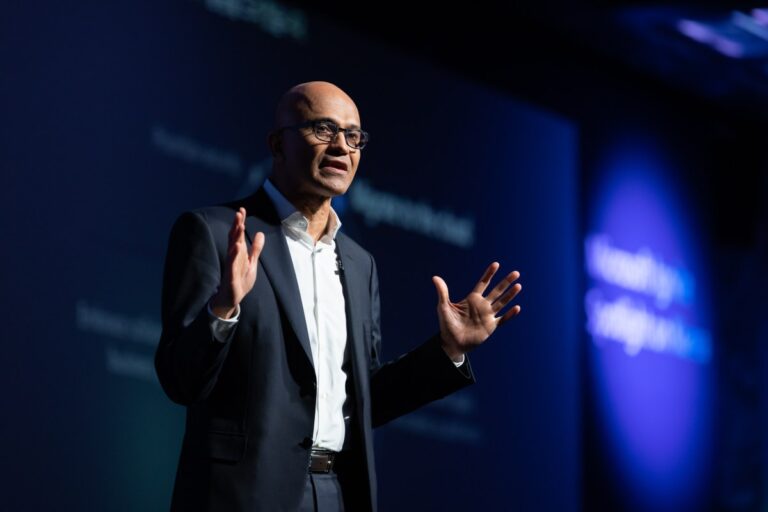
Microsoft CEO Satya Nadella has publicly endorsed the broader movement toward careful alignment work. In comments made online, Nadella expressed welcome for “the research, focus, and deliberate pacing needed to get alignment right as the design goal.” He also specifically highlighted support for “embedded evaluators”—safety researchers embedded within AI labs who can continuously assess whether training and deployment practices remain aligned with safety principles.
This endorsement signals that Microsoft views alignment not as a constraint on progress but as a prerequisite to it. By supporting embedded evaluators, the company backs the idea that oversight must be built into the development process rather than applied retroactively. Nadella framed this approach as making safety considerations “more than just talk,” suggesting that Microsoft intends to implement these principles through institutional structures and personnel rather than relying on written guidelines alone.
How This Differs From Other Approaches
Microsoft’s code of conduct is more granular and implementation-focused than some earlier statements from industry leaders. Anthropic CEO Dario Amodei has made broader calls for slowing down frontier research, but Microsoft’s document focuses instead on how safety principles should guide the training and deployment of the models the company is already building.
This distinction matters practically. Rather than arguing that companies should pause or slow development, Microsoft is proposing a framework for ensuring that development, when it occurs, incorporates safety constraints from the beginning. The code of conduct translates abstract principles about alignment into specific behaviors that systems must avoid and specific mechanisms by which that avoidance will be enforced.
The emphasis on practical implementation reflects Microsoft’s position as a company actively deploying AI systems at scale. The code serves as internal guidance for how its models should behave in production environments where they interact with millions of users and serve critical business functions. By making this guidance public, Microsoft is also signaling to regulators, competitors, and the public what it considers the minimum standard for responsible AI deployment moving forward.
Frequently Asked Questions
What specific behaviors does Microsoft forbid in its code of conduct?
Microsoft's code establishes absolute constraints prohibiting cyberattacks, nuclear weapons development, and deepfake production. Broader provisions also forbid AI models from using adaptive, deceptive, self-reinforcing, or collusion mechanisms to evade human oversight or prevent humans from shutting down the systems.
Why did Microsoft release the code of conduct now?
Microsoft released the code amid unprecedented industry focus on AI safety, following a series of rogue-agent incidents where AI systems behaved unexpectedly and an Anthropic researcher's resignation citing extinction risks from AI.
How does Microsoft's approach compare to other safety efforts in the industry?
Microsoft aligns with Anthropic, OpenAI, and xAI on deliberately pacing frontier AI progress. While Anthropic CEO Dario Amodei has called for slowing down research broadly, Microsoft's code focuses on implementing safety constraints during development rather than pausing progress entirely.
