
Key takeaways
- Trump called Nvidia CEO Jensen Huang live at the All-In Summit and publicly backed faster AI development while dismissing Anthropic CEO Dario Amodei's call for restraint as a hoax.
- Gallup polling shows 70% of Americans oppose data center construction in their area, with environmental impact and cost-of-living concerns as the primary reasons.
- The Trump administration characterizes opposition to data centers as a coordinated psychological operation designed to undermine American AI competitiveness.
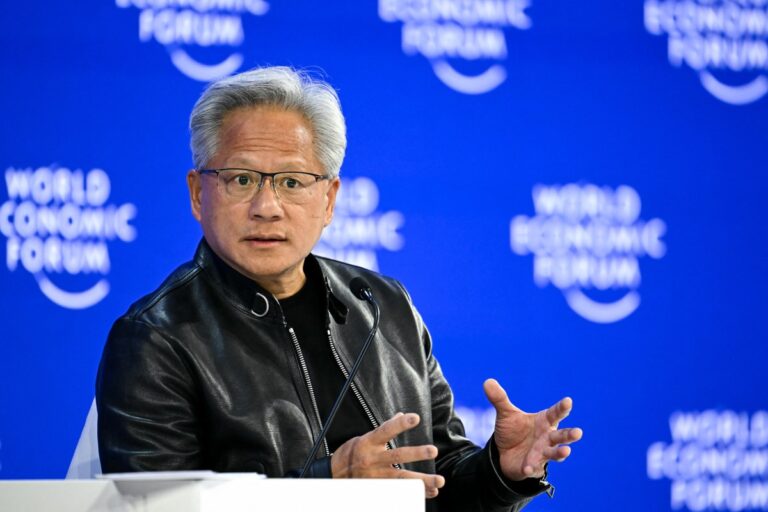
During Nvidia CEO Jensen Huang’s appearance at the All-In Summit in Los Angeles on Monday morning, President Donald Trump called him live on stage, creating a moment that brought into sharp focus an emerging disagreement within technology leadership over how aggressively to pursue artificial intelligence advancement. The call, which Huang put on speaker with assistance from stagehands, interrupted what had been an on-stage discussion with venture capitalists Chamath Palihapitiya and Jason Calacanis as well as White House advisers David Friedberg and David Sacks.
A Moment at the Summit
What began as an interrupted broadcast became a public articulation of how the Trump administration plans to position itself in the escalating debate over AI development’s pace and trajectory.
The Competing Visions for AI Development
The immediate catalyst for Trump’s call was a public statement made days earlier by Anthropic CEO Dario Amodei calling for a deliberate slowing of the pace at which artificial intelligence systems improve their capabilities. Amodei’s argument for restraint had already found public support from two other major industry figures: SpaceX CEO Elon Musk and OpenAI CEO Sam Altman both announced they agreed with Amodei’s position, creating what appeared to be consensus among some of the most prominent voices in AI toward a more measured approach.
Jensen Huang’s views diverge sharply from this emerging coalition. The Nvidia CEO has consistently positioned himself in favor of continued acceleration rather than restraint, a stance that had created visible daylight between him and peers like Amodei, Musk, and Altman.
On the All-In stage, when discussion turned to Amodei’s call for slower AI capability improvements, Trump seized the opportunity to publicly align with Huang while explicitly rejecting Amodei’s approach. “They’re just playing right in the hands of a lot of people that don’t want to see it happen,” Trump told Huang through the speakerphone. “That could be political people. It could also be China. And we’re not going to let that happen. It’s a hoax.”
Rather than presenting this as a legitimate policy disagreement between thoughtful technologists, Trump framed caution about AI development speed as conspiratorial or malign, suggesting that concerns expressed by Amodei and others served external interests hostile to American advancement. Huang responded with alignment, stating, “You’re right. We’re not going to let that happen, sir” while the audience applauded, cementing the public moment as a show of solidarity between the Nvidia CEO and the U.S. president.

Where Public Concern Actually Originates
The theoretical debate about AI development pace has concrete consequences in the form of massive infrastructure expansion. Training and deploying advanced AI systems requires enormous data centers consuming vast computational resources, and these facilities have triggered resistance in communities where companies propose to build them.
The Scale of Community Opposition
Recent Gallup polling quantifies this resistance with striking clarity: seven in 10 Americans oppose the construction of data centers in their local area. This opposition is not distributed evenly across reasons—more than half of respondents cited the effect of data centers on environmental resources as their primary concern, while an additional 20 percent expressed worry about how data center construction would affect their cost of living and quality of life.
How the Administration Interprets Resistance
Trump and his allies present a fundamentally different explanation for this opposition. Y Combinator CEO Garry Tan, among others aligned with the administration, have articulated the theory that growing public sentiment against data center construction represents a coordinated psychological operation, potentially orchestrated by international adversaries or domestic political opponents seeking to stifle American economic growth through AI infrastructure restrictions.
In this interpretation, the polling data showing majority opposition becomes evidence not of legitimate community concern but of successful manipulation campaigns. Trump’s language to Huang reflected this framing: “We have to be a little bit careful… We have to do things and we have to do them prudently, but that doesn’t mean we’re going to stop an industry. So I’m with you all the way. I didn’t even know how you felt about it. I just hoped you felt the same way as me. We’re going to lead.”
The rhetorical move is significant—acknowledging a need for prudence while simultaneously characterizing concerns as a hoax, then pivoting to assertions of continued industry advancement without restriction.
Business Interests and Industry Positioning
Different Companies, Different Stakes
The public nature of Trump’s endorsement carries weight precisely because it elevates what might otherwise remain an internal industry debate into a question of national political importance. Amodei’s position at Anthropic reflects a particular governance philosophy: that slowing AI capability improvement provides time for safety measures and oversight mechanisms to develop in parallel. This represents a cautious approach to technological risk with historical precedent in other domains such as pharmaceutical testing, which deliberately creates timelines where safety validation precedes deployment.
Huang’s position prioritizes competitive advantage and capability leadership. Nvidia manufactures the processors essential to both training and running large language models and other AI systems. Faster development and deployment timelines directly benefit Nvidia’s business by increasing demand for its products, creating a structural incentive that aligns the Nvidia CEO’s public statements with corporate interests.
Trump’s intervention politicizes what was already a disagreement into a matter presented as patriotic necessity versus alleged obstruction. By having the president publicly characterize Amodei’s caution as a hoax while endorsing Huang’s acceleration, the moment transforms industry debate into a competition over whose vision aligns with national interest.
The Regulatory Path Forward
Trump’s assertion that “we’re not going to let that happen” signals executive branch willingness to reduce regulatory barriers to data center expansion and continued AI infrastructure development. This approach does not address the underlying material concerns driving public opposition—the actual environmental resource demands of data centers or the genuine risks of community disruption when large industrial facilities arrive—but rather dismisses them as coordinated insincerity.
The consequence is likely to be a regulatory environment more favorable to rapid infrastructure expansion, which would align with both Huang’s business interests and Trump’s stated commitment to American technological dominance. Whether this approach resolves or merely suppresses the tensions between community interests and industry expansion remains to be determined.
Frequently Asked Questions
Why did Trump call Huang during the All-In Summit?
Trump wanted to publicly endorse Huang's support for rapid AI development and reject Anthropic CEO Dario Amodei's recent call to slow AI capability improvements.
What does public polling show about data center construction?
According to Gallup, 70% of Americans oppose data center construction in their area, with over 50% citing environmental impact and 20% citing cost-of-living concerns.
How does the administration explain public opposition to data centers?
Trump and Y Combinator CEO Garry Tan characterize opposition as a coordinated psychological operation by international or domestic actors seeking to undermine American AI leadership.
