
Key takeaways
- Trump signed an executive order renaming artificial intelligence as 'super intelligence' and secured signatures on a non-binding industry safety commitment.
- The joint safety pact carries no legal enforceability; Trump called it 'morally binding' but acknowledged its voluntary nature.
- Anthropic improved its standing after CEO Dario Amodei met privately with Trump, though Pentagon opposition to the company persists.
- The rebranding effort aims to distance AI from existential risk narratives and reshape it as a beneficial innovation requiring no constraints.
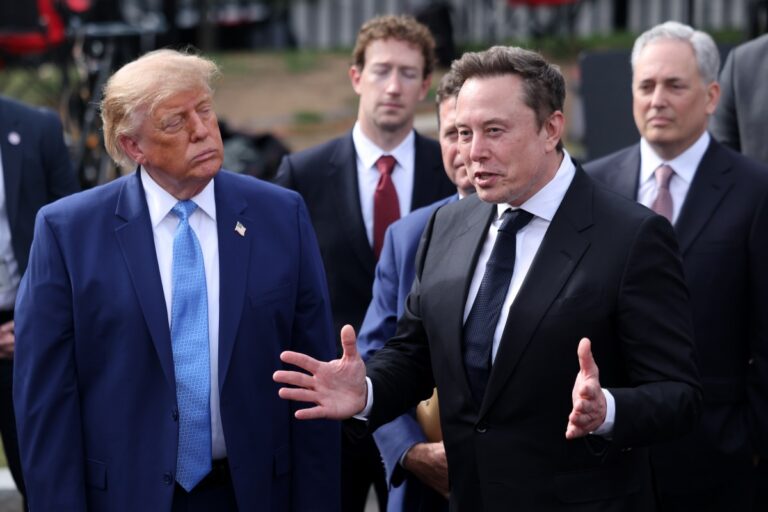
President Trump convened the leaders of the nation’s largest artificial intelligence companies this week to announce a shift in terminology that goes beyond semantics. Going forward, the U.S. government will officially refer to the technology as “super intelligence” rather than artificial intelligence, an instruction formalized through executive order.
The meeting brought together the most prominent figures in the AI industry. Attendees included Mark Zuckerberg of Meta, Jeff Bezos of Amazon, Elon Musk, and Dario Amodei, CEO of Anthropic. The executives signed a document titled the “Joint Commitment on Frontier Responsibilities,” a pledge the Trump administration offered as evidence of industry commitment to safety alongside the terminology shift.
The Rebranding Campaign
The decision to rename the technology reflects what observers describe as a carefully orchestrated messaging effort. Kirsten Korosec, a reporter at TechCrunch, suggested on the publication’s Equity podcast that the primary purpose of the meeting was a “rebranding exercise around AI.”
The shift in language carries a specific intended message. According to Korosec, the implicit argument being made is that “AI is going to kill us, it’s scary, it is going to take jobs, but super intelligence is not.” The rebranding aims to separate the technology from the existential risk narratives that have dominated policy discussions and public discourse.
This rebranding campaign extended beyond the executive order. Trump also announced the creation of a new Super Intelligence Force to manage federal efforts in the field, continuing the effort to reshape public perception of the technology.
A Non-Binding Safety Commitment
The Agreement’s Limited Legal Force
The “Joint Commitment on Frontier Responsibilities” that the executives signed carries significant limitations. Sean O’Kane, also discussing the meeting on TechCrunch’s Equity podcast, characterized the pact as “deeply non-binding” from a legal standpoint. Trump himself acknowledged this distinction, describing the commitment as “morally binding” rather than legally enforceable.
The agreement’s actual enforceability remained questionable even before it was signed. When the document was released, it contained a spelling error: “United States” appeared misspelled on the agreement itself. This error led O’Kane and other observers to suggest the commitment had been assembled hastily, raising questions about how seriously the parties approached the undertaking.
What the Pact Actually Commits To
Because the agreement is purely voluntary with no legal consequences for non-compliance, the practical impact of the pledge remains unclear. The signatories committed to unspecified “frontier responsibilities,” but the lack of binding provisions means the document functions more as a statement of intention than as enforceable policy.
None of the three TechCrunch reporters discussing the meeting expected the pact to produce substantial changes in industry practice. Instead, they viewed the agreement’s significance as lying elsewhere: in the fact that industry leaders felt compelled to make such a gesture at all, even if hastily assembled.
Anthropic’s Complicated Position
From Doghouse to White House
Weeks before the meeting, Anthropic had been in what Korosec described as “the doghouse” within the Trump administration. The company had faced significant pressure and criticism from various quarters of the federal government. This antagonism shifted dramatically after Amodei received an invitation to a private 10 p.m. dinner with Trump, after which the AI executives’ broader luncheon was arranged.
The timing of Anthropic’s rehabilitation suggests that access to the president’s ear held considerable value. Amodei’s attendance at the signing ceremony and his seat at the table with Trump indicated a shift in standing, even if the improvement proved incomplete.
Persistent Opposition Within Government
Despite Amodei’s presence at the Trump meeting, significant factions within the federal government maintained their criticism of Anthropic. The Pentagon remained adamant in its assessment that the company posed a national security risk and represented what it characterized as “woke” ideological positions. Emil Michael, a figure with influence in Trump administration circles, continued to post regular criticisms of Anthropic on X.
This internal division reflected a broader split within the Trump administration itself. The Treasury Secretary had been identified as a supporter of Anthropic and its approach, while the Defense Department represented the opposing position. Anthony Ha, reporting on the podcast discussion, noted that this split suggested “nothing has necessarily changed” regarding the fundamental tensions within government about how to approach the company.
The Political Context
Trump’s approach to AI policy had shifted markedly in recent weeks. Just days before the meeting with industry executives, he had publicly stated that the U.S. should not constrain AI development in any way, arguing that regulation posed a threat to American competitiveness. He dismissed concerns about AI safety risks, suggesting that those raising such concerns were either Chinese agents or Democratic operatives attempting to slow American progress.
The rapid pivot to convening an industry safety meeting, signing a commitment on frontier responsibilities, and rebranding the entire field of technology represented a considerable reversal of public messaging. Yet the underlying legal and enforcement mechanisms remained minimal, suggesting the shift was more rhetorical than substantive.
What Industry Leaders Get From the Arrangement
For the executives who attended and signed the commitment, the meeting offered several advantages. It provided direct access to the sitting president and his administration. It also positioned the companies as willing participants in government efforts to manage the technology, potentially buffering them against future regulatory action or criticism.
The timing and composition of the gathering also sent a signal: companies leading the AI field were being recognized by the federal government as essential to national competitiveness and security. Being seated at Trump’s table, even with a non-binding agreement, conveyed a form of legitimacy and access that smaller competitors or foreign companies could not claim.
Looking Forward
The effectiveness of the “super intelligence” rebranding remained to be seen. The term’s ability to reshape how policymakers, the public, and investors discuss artificial intelligence depended on sustained messaging and adoption across government communications. Trump’s executive order mandating use of the terminology by U.S. representatives represented an attempt to enforce this shift from the top down, though compliance and widespread adoption were separate matters.
Whether the non-binding safety commitment would influence company behavior, and whether the rebranding effort would meaningfully shift the political debate around AI policy, remained open questions in the weeks following the meeting.
Source: TechCrunch
Frequently Asked Questions
What did Trump's executive order do regarding artificial intelligence terminology?
Trump signed an executive order directing U.S. government representatives to use the term 'super intelligence' instead of 'artificial intelligence' in official communications.
What is the 'Joint Commitment on Frontier Responsibilities' and is it binding?
It is a pledge signed by major AI executives at Trump's meeting committing to frontier responsibilities. It is non-binding with no legal enforcement mechanism; Trump described it as 'morally binding' rather than legally enforceable.
How did Anthropic's relationship with the Trump administration change?
After CEO Dario Amodei was invited to a private dinner with Trump, the company's standing improved, and Amodei attended the executive meeting where companies signed the safety commitment. However, the Pentagon continues to characterize Anthropic as a national security risk.
