
Key takeaways
- Archer Aviation acquired former rival Wisk Aero in a major consolidation move, with Boeing receiving a 16.5% stake in Archer, settling a two-year intellectual property lawsuit that instead led to collaboration.
- Joby Aviation expanded into defense with a $500 million acquisition of Resonant Sciences, creating Joby Defense as a dedicated division to generate near-term revenue while pursuing longer-term air taxi certification.
- Autonomous vehicle companies accelerated operations in California, with Waymo receiving expanded commercial authority, Aurora and Kodiak gaining public road testing permits, and Avride reaching 100,000 rides in Dallas.
- The industry shifts signal how electric aviation and autonomous vehicle startups are balancing lengthy regulatory approval timelines against pressure to demonstrate near-term viability and revenue generation.
The electric aviation and autonomous vehicle sectors are undergoing rapid consolidation this week, with major acquisitions and expansions signaling how companies are balancing lengthy regulatory timelines against the pressure to generate near-term revenue streams. The deals and operational approvals reveal an industry matured enough to pursue vertical integration and geographic expansion, yet still dependent on external capital and partnerships to sustain development.
Archer’s Acquisition of Former Rival Wisk Marks Major eVTOL Consolidation
In one of the more unexpected turns in the eVTOL industry, Archer Aviation announced the acquisition of Wisk Aero, a company it had been locked in legal battle with just years earlier. The deal marks a significant moment for the nascent electric vertical takeoff and landing sector, which has faced mounting pressure to demonstrate technological and financial viability while navigating lengthy federal certification processes.
Archer’s purchase of Wisk came as part of a larger transaction in which Boeing agreed to divest three subsidiaries to the company. Beyond Wisk, Boeing is selling SkyGrid, a digital airspace and air traffic management software company, and Insitu, a drone manufacturer. In exchange for divesting these businesses, Boeing receives a 16.5% ownership stake in Archer, cementing a partnership between the aerospace giant and the eVTOL developer that signals traditional aviation’s commitment to electric aircraft development.
From Two-Year Lawsuit to Acquisition
The path from litigation to acquisition is anything but conventional in the aviation industry. In 2021, Wisk sued Archer over allegations of “brazen theft” of confidential information and intellectual property. That dispute stretched across two years before the companies reached an unusual settlement that not only ended the original lawsuit but also terminated Archer’s separate $1 billion countersuit for damages. Rather than remaining competitors, the settlement ultimately led to collaboration agreements and now to full acquisition.
Wisk’s Winding Journey Through Electric Aviation
Wisk itself represents multiple pivots within the electric aviation space. The company originated as Kitty Hawk, an electric aviation startup founded by Sebastian Thrun, co-founder of Google’s moonshot factory X and backed by Google co-founder Larry Page. Kitty Hawk shut down in September 2022, though its Cora program persisted as a joint venture with Boeing that was later renamed Wisk Aero. The acquisition by Archer now consolidates these assets under a single operator, eliminating redundancy and pooling engineering resources.
Strategic Consolidation in Capital-Intensive Sector
The acquisition reflects broader industry consolidation as eVTOL companies seek to streamline operations and secure reliable funding sources. Boeing’s 16.5% stake in Archer demonstrates traditional aerospace’s direct interest in the sector, though it also underscores how capital-intensive electric aircraft development remains. For Archer, acquiring Wisk and the SkyGrid airspace management platform potentially bolsters its technical capabilities and regulatory positioning ahead of critical certification milestones with the FAA.
Joby Expands Into Defense With $500 Million Acquisition
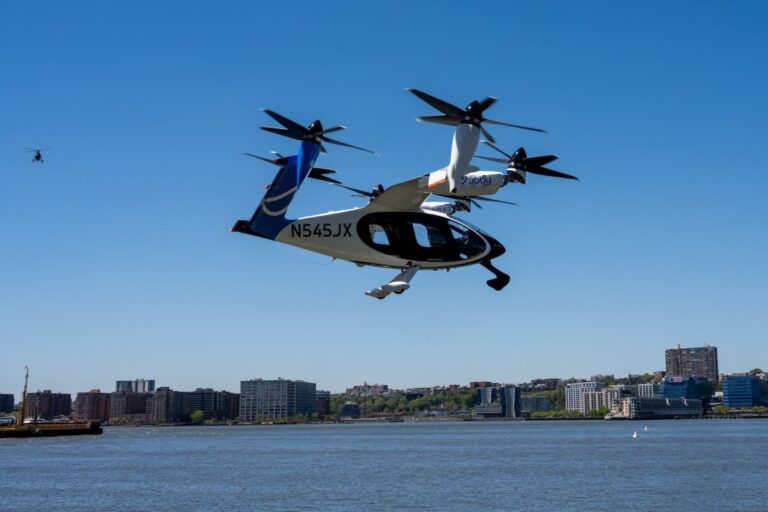
While Archer consolidates horizontally within urban air mobility, Joby Aviation is pursuing a different strategic direction—expanding into the defense sector with a $500 million acquisition of Resonant Sciences, a company specializing in radio frequency and sensor systems.
Resonant Sciences will operate under a new Joby subsidiary called Joby Defense, marking an acceleration of Joby’s multi-year strategy to diversify revenue streams beyond its core electric air taxi ambitions. The company has been gradually entering defense work over the past two years while maintaining its primary mission to certify and manufacture eVTOL aircraft for urban air taxi services, demonstrating how autonomous aviation startups are building multiple business lines to sustain operations.
Defense Contracts Address Revenue Timeline Challenges
Defense contracts represent a significant revenue opportunity for aviation startups facing long certification timelines. While Joby continues pursuing commercial urban air mobility—a market that remains several years away from wide-scale deployment—defense applications offer near-term monetization and leverage existing engineering expertise in autonomous systems, advanced propulsion, and sensor technology. The $500 million investment signals confidence in both the defense opportunity and Joby’s ability to execute dual missions.
Resonant Sciences’ Contribution to Joby Defense
Resonant Sciences’ radio frequency and sensor capabilities align with military applications ranging from uncrewed systems to broader defense infrastructure modernization. By formalizing this business line under Joby Defense, the company establishes organizational separation while maintaining resource sharing with its commercial eVTOL division. This structure allows Joby to pursue government contracts without conflating commercial aviation development with defense work.
Autonomous Vehicle Operations Accelerate in California
The autonomous vehicle sector, further along in regulatory approval than eVTOL aircraft, is rapidly expanding operational footprints this week across ride-hailing, delivery, and trucking segments. Multiple companies received new approvals or announced significant operational milestones.
Waymo Receives Expanded California Operating Authority
Waymo received expanded commercial operating authority from California’s Public Utilities Commission, allowing its robotaxis to charge customers across a broader territory spanning the San Francisco Bay Area and Los Angeles. The new permit also clears the way for service expansion to Sacramento and San Diego, though Waymo stated these markets have not yet launched. The expansion builds on Waymo’s existing operations in both regions and positions the company as the leading commercial autonomous vehicle operator in California by regulatory scope.
Self-Driving Trucks Enter California Public Roads
Aurora Innovation and Kodiak AI both received permits from California’s Department of Motor Vehicles to test self-driving trucks on public roads. Kodiak AI has already commenced testing under its new authorization, expanding the limited roster of companies authorized for on-road autonomous trucking trials. These permits represent crucial steps toward commercial autonomous trucking operations, a sector with significant economic implications given trucking’s central role in freight movement and logistics networks.
Avride Reaches 100,000 Autonomous Ride Milestone in Dallas
Avride announced it has surpassed 100,000 autonomous rides on the Uber app in Dallas. The figure arrives roughly two months after the company reached 60,000 rides, indicating sustained growth and user adoption of autonomous ride-hailing services. However, the milestone carries an important caveat: each ride still includes a human safety operator behind the wheel, meaning the service does not yet represent fully driverless operation. Avride declined to provide weekly ridership breakdown data that would illustrate operational velocity or seasonal patterns.
Portfolio Shifts and International Expansion
Beyond the major deals and regulatory approvals, the week saw companies repositioning portfolios and pursuing international growth in autonomous mobility.
Uber Divests Serve Robotics Stake Amid Portfolio Shift
In a surprising move, Uber sold its entire stake in Serve Robotics, the autonomous delivery robot company that spun out of Uber more than five years ago. What makes the divestment notable is that Serve reportedly learned about the sale through Uber’s regulatory filing rather than direct communication from its former parent company. Despite the stake sale, Uber and Serve remain business partners, with a partnership contract set to expire in 2027 that places Serve’s delivery robots on the Uber Eats app. The sale signals a shift in Uber’s autonomous vehicle investment strategy after years of active deal-making in the sector.
Pony.ai and Uber Target 2,000 Robotaxis in Europe
Pony.ai and Uber announced plans to bring 2,000 robotaxis to four European cities as part of an expanded partnership. The initiative extends the companies’ collaboration into new geographic markets, where autonomous ride-hailing faces different regulatory frameworks, infrastructure requirements, and competitive dynamics than the United States. European expansion represents a significant growth opportunity for autonomous vehicle operators seeking to diversify geographic revenue sources.
Yulu Secures $93 Million Series C Funding
Electric mobility startup Yulu raised $93 million in a Series C funding round comprising $63 million in equity led by GEF Capital Partners and $30 million in debt financing. The raise underscores continued investor confidence in electric two and three-wheeled vehicles, a category that remains underpenetrated in many global markets and addresses last-mile transportation demands.
Safety Frameworks and Regulatory Development
Zoox released its safety case framework, a comprehensive document detailing how and why the company believes its autonomous vehicle technology meets rigorous safety standards. The framework carries particular weight given that no federally mandated test or “driver’s license” equivalent exists for autonomous vehicles in the United States. By publishing detailed safety reasoning, Zoox aims to build public trust and establish a replicable standard for the autonomous vehicle industry more broadly. The framework addresses a critical gap in regulatory certainty that has long clouded investor and consumer confidence in autonomous vehicle deployment.
Frequently Asked Questions
Why did Archer Aviation acquire Wisk despite their legal dispute?
The companies settled their 2021 lawsuit over intellectual property in an unusual agreement that not only ended the original suit and Archer's $1 billion countersuit but ultimately led to collaboration agreements and acquisition, allowing both to consolidate operations and resources.
How much did Joby pay for Resonant Sciences and why?
Joby paid $500 million for Resonant Sciences, which specializes in radio frequency and sensor systems. The acquisition created Joby Defense to generate near-term defense revenue while Joby pursues electric air taxi certification, which remains years away from commercial deployment.
What approval did Waymo receive from California?
California's Public Utilities Commission approved expanded commercial operating authority for Waymo, allowing its robotaxis to charge customers across broader territory in the San Francisco Bay Area and Los Angeles, with additional clearance for expansion to Sacramento and San Diego.
