
Key takeaways
- The Idaho National Laboratory is investigating whether Chinese lidar sensors contain cybersecurity vulnerabilities that could allow China to disable or gather data from U.S. autonomous vehicles.
- Chinese lidar prices have fallen from $75,000 a decade ago to hundreds of dollars, prompting interest from automakers whose U.S. competitors are consolidating or exiting due to cost pressures.
- Lawmakers are advancing multiple bills to restrict Chinese lidar, while the Department of Defense has blacklisted Hesai and RoboSense, though Commerce restrictions on automotive technology don't yet cover sensors.
- A 2024 Hesai software error caused connected vehicles to stop for a full day, highlighting how integrated lidar has become to autonomous vehicle operation.
A federal laboratory operated by the Department of Energy is examining whether laser-based sensors manufactured in China could pose national security risks if deployed widely in American autonomous vehicles. The investigation, being conducted by the Idaho National Laboratory, is focusing on potential cybersecurity vulnerabilities rather than technical performance, according to two people familiar with the effort who requested anonymity.
The lab is conducting the work at the request of one or more companies in the electric and autonomous vehicle sectors, the sources said. Despite inquiries from multiple major automakers and autonomous vehicle developers—Rivian, General Motors, Ford, Kodiak, Lucid Motors, Nuro, and Uber—none reported having knowledge of the review. Nvidia, Zoox, and Aurora declined to answer questions about their involvement. When asked to comment in June and July, the Idaho National Laboratory stated it was not at liberty to discuss the project publicly. Hesai and RoboSense, the two leading Chinese manufacturers of lidar sensors, also did not respond to requests for comment.
The Investigation Underway
What the Lab Is Examining
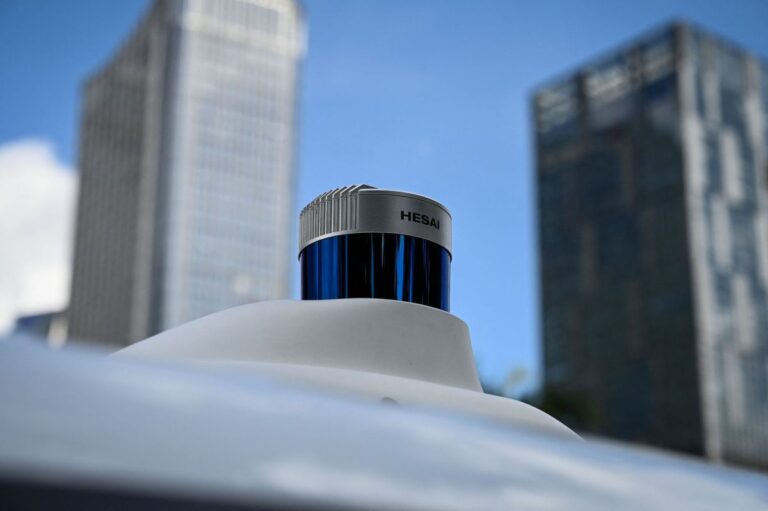
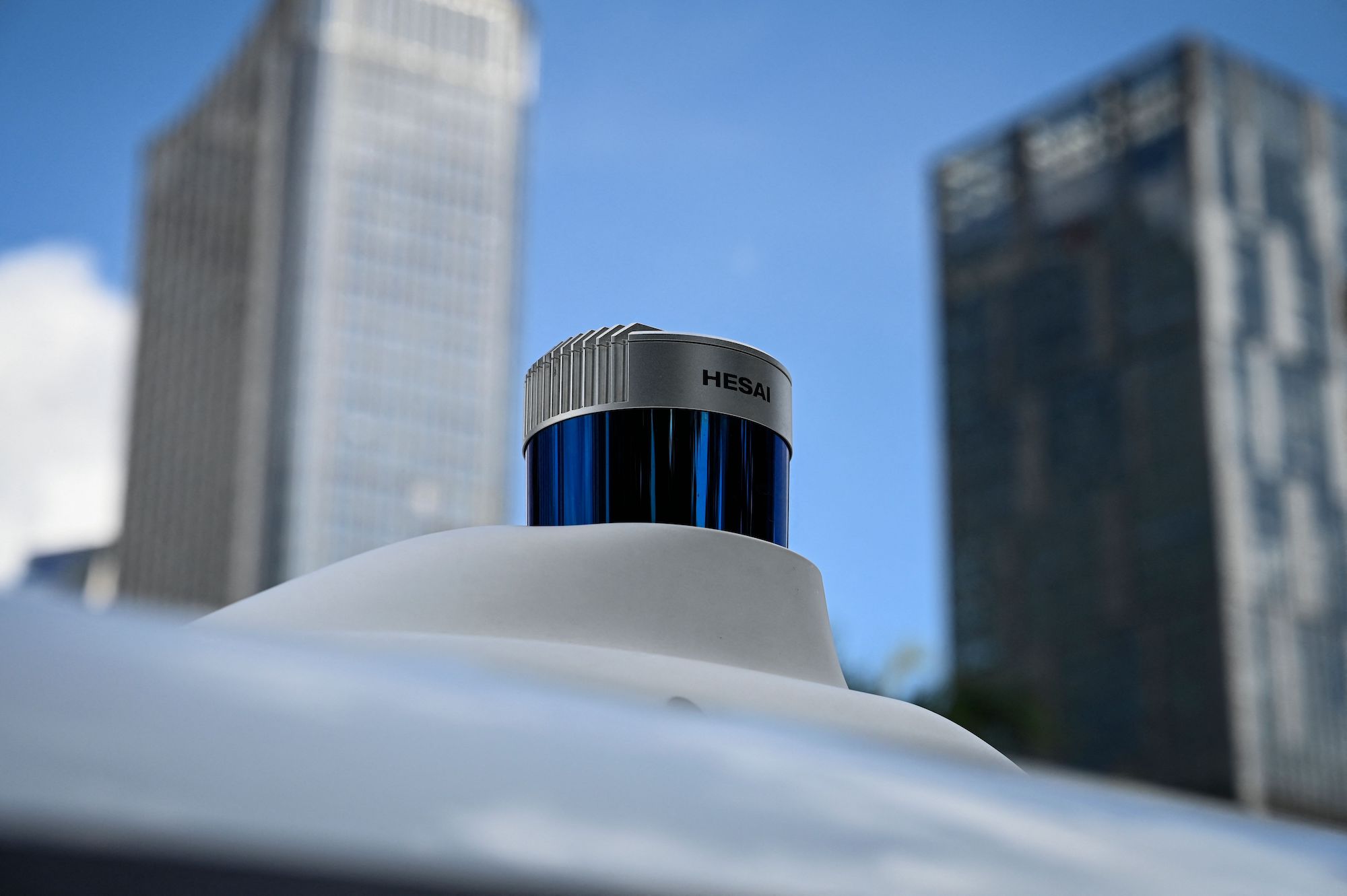
Lidar sensors detect distance and shape by emitting laser pulses and measuring their reflection off nearby objects. The technology has become central to autonomous vehicle development because it provides high-resolution, real-time perception of a vehicle’s surroundings. The Idaho National Laboratory’s review is examining whether the sensors have built-in security flaws that could be exploited.
The focus appears to be on ruling out—or identifying—specific cybersecurity vulnerabilities rather than on conducting general performance testing. A preliminary outcome could grant Chinese-made lidar a security clearance of sorts, based on the sources’ account of the lab’s intentions.
Why This Matters Now
The investigation comes as lawmakers introduce legislation to restrict Chinese lidar use and as major automakers face a practical problem: American lidar manufacturers are struggling to compete on cost. U.S. companies have either consolidated with competitors or, as in the case of Luminar, exited the market entirely through bankruptcy.
The Specific Risks Identified
Espionage and Strategic Control
Senator Tammy Baldwin of Wisconsin, co-sponsoring the Securing Infrastructure from Adversaries Act with Senator Ted Budd of North Carolina, framed the issue as a national security matter. “As infrastructure becomes more sophisticated, the threat Chinese LiDAR technology poses to American communities and our national security cannot be allowed to go unchecked,” she said. “We need to be doing more to protect Americans and that starts with ensuring taxpayer dollars aren’t being used to purchase technologies that could be used to spy on us.”
Congressman John Moolenaar of Michigan, supporting a separate bill to restrict Chinese lidar, told CNBC that he worries about “back doors” that could “transmit information back to these Chinese Communist interests.”
Supply Chain Dependence
Omer Keilaf, chief executive of Innoviz, an Israeli lidar manufacturer, outlined the vulnerability in straightforward terms: China’s government classifies lidar as strategically important technology. If an automaker builds its entire autonomous driving system around Chinese lidar, it becomes vulnerable to supply disruptions or coercion. Keilaf said he was unaware of the Idaho National Laboratory’s review until informed about it during an interview.
How the Sensors Could Be Compromised
Keilaf identified two distinct cybersecurity pathways. First, lidar units could potentially be disabled remotely, disrupting vehicles in motion. Researchers have shown that individual lidar sensors can be jammed using directed lasers, though the practical challenge of simultaneously disabling lidar across an active fleet of robotaxis has not been demonstrated.
Second, the high-resolution spatial data that lidar collects can be compressed and exfiltrated through a cellular modem embedded in the sensor. “It’s not very difficult to extract that information,” Keilaf said, drawing on seven years in Israeli intelligence work. “Eventually, the amount of data that the lidar is generating is pretty easily compressed if someone wants to.”
Why Cost Reduction Accelerated Interest in Chinese Lidar
A decade ago, a single lidar sensor cost approximately $75,000. Today, some models sell for a few hundred dollars. The cost collapse, driven by manufacturing scale and lower labor and capital costs in China, has fundamentally changed the economics of autonomous vehicle development.
Tesla chose not to use lidar at all, with CEO Elon Musk calling it a “crutch,” but most autonomous vehicle developers have relied on it as a core sensor. The dramatic price drop made it feasible for smaller companies and those cost-sensitive to consider lidar. Simultaneously, American lidar makers found it difficult to match the economies of scale achieved by Hesai and RoboSense. This dynamic led to consolidation across the U.S. lidar industry and pushed several automakers toward Chinese suppliers.
The Regulatory Response Takes Shape
Congressman Raja Krishnamoorthi of Illinois introduced legislation warning that widespread adoption of Chinese lidar could allow foreign actors to gather sensitive data or disrupt autonomous systems. The Department of Defense has already blacklisted both Hesai and RoboSense, placing them on its 1260H list due to alleged connections with the People’s Liberation Army. This designation prevents them from conducting business with U.S. military contractors.
In 2025, the Commerce Department implemented rules prohibiting the use of Chinese-made connectivity hardware in U.S. passenger vehicles. However, this restriction does not extend to lidar or other autonomous vehicle sensors, leaving them in a regulatory gap.
What Automakers Are Actually Doing
Rivian is planning a version of its R2 SUV with lidar integrated into the roof. In March, Rivian CEO RJ Scaringe told Reuters the company was exploring the possibility of manufacturing lidar domestically using Chinese technology, potentially through partnerships or joint ventures. “A number of different car manufacturers are thinking about how they could do that either together, or at least through a shared alignment to say, hey, let’s develop production capacity in the United States for this, or at least outside China,” Scaringe said, indicating discussions with other automakers and lidar firms.
The company’s chief financial officer later clarified that Rivian has no plans to develop lidar manufacturing capabilities in-house.
A Recent Incident Offers a Glimpse of Real Risk
In early 2024, vehicles equipped with Hesai lidar sensors became inoperable for an entire day. The cause was not malicious: Hesai had not properly accounted for the leap year’s additional day in its software, causing all affected vehicles to stop functioning simultaneously.
The incident demonstrated the single point of failure that lidar can represent in autonomous vehicle systems and how tightly integrated the sensors have become to vehicle operation. A software error—whether accidental or intentional—is sufficient to immobilize entire fleets.
Frequently Asked Questions
Why is a federal lab investigating Chinese lidar?
The Idaho National Laboratory is examining whether Chinese-made lidar sensors contain cybersecurity vulnerabilities that could potentially be exploited for espionage or to remotely disable autonomous vehicles.
Why are automakers considering Chinese lidar?
Chinese manufacturers like Hesai and RoboSense have reduced lidar costs from $75,000 a decade ago to a few hundred dollars, making it difficult for U.S. companies to compete. Several American lidar makers have consolidated or filed for bankruptcy, limiting domestic supply.
What has Congress done to restrict Chinese lidar?
Multiple bills are advancing, including the Securing Infrastructure from Adversaries Act sponsored by Senators Tammy Baldwin and Ted Budd. The Department of Defense has placed both Hesai and RoboSense on its 1260H restricted list. However, 2025 Commerce restrictions on automotive technology apply only to connectivity hardware, not to sensors like lidar.
