
Key takeaways
- TechCrunch Disrupt 2026's Builders Stage focuses on operational scaling rather than AI hype, with sessions on fundraising, hiring, and go-to-market strategy.
- Early-stage companies are now expected to reach $10M annual recurring revenue in months, compressing growth timelines that historically took years.
- Founders are increasingly designing for acquisition as an outcome and building multi-model AI architectures with hybrid human-AI teams.
TechCrunch Disrupt 2026 is dedicating an entire stage to the operational and strategic decisions that transform startups from early stage into scaled companies. Running October 13-15 at Moscone Center in San Francisco, the Builders Stage operates as one of six industry-focused tracks within a conference expected to draw more than 10,000 founders, investors, startup operators, and technology leaders. The programming spans fundraising mechanics, hiring and retention, go-to-market execution, and the evolving role of artificial intelligence in company building. Early-bird ticket pricing offers up to $330 in savings before the next increase.
AI Startups Face a Shifting Competitive Landscape
The AI startup ecosystem is moving faster and consuming more capital than any previous generation, yet speakers at Disrupt will challenge whether AI alone guarantees defensibility or valuation. Michel Tricot, CEO of Airbyte; Rob Toews, partner at Radical Ventures; and Linda Tong, CEO of Webflow, will examine a recurring founder fear: what happens when OpenAI or Anthropic launches a competing product. The session will explore where defensibility actually exists and what happens when startups find themselves outmaneuvered by rapidly evolving AI giants.
A separate panel from Baillie Gifford and General Catalyst will make a counterargument to AI hype. The conversation will focus on what actually predicts enduring company value now: efficient growth, retention, revenue quality, and disciplined execution. The implicit claim is that many AI startups mistake early adoption for defensibility.
Capital Strategy and the New Traction Baseline
Jas Khaira, Global Head of Blackstone N1, will address what separates companies with durable growth from those showing early flash. The discussion will examine how founders should think about capital as they scale, and what mega-funds prioritize when backing category-defining businesses.
Series A fundraising has become harder. Investors from Index Ventures, Peak XV, and Bessemer Venture Partners will define what “fundable” means in 2027, outlining the metrics, team composition, and traction that now matter. The bar for what constitutes progress has moved. Ryan Meadows of Lovable and Tomasz Tunguz of Theory Ventures will discuss how AI-enabled execution and faster distribution are compressing go-to-market timelines. Companies are now expected to reach $10 million in annual recurring revenue in months rather than years. The session will break down the tactical levers founders need in the first 90 days to accelerate revenue.
Pre-Seed Fundraising Before Product
Investor expectations have shifted earlier in the company lifecycle. Puneet Agarwal of True Ventures, Austin Clements of Slauson and Co, and Sandhya Venkatachalam of Axiom Partners will break down how founders build credibility and land initial checks when revenue is zero. The focus is on founder-market fit, conviction, and story—the elements VCs now evaluate before a functioning product exists.
Hiring and Retention in a Talent Scramble
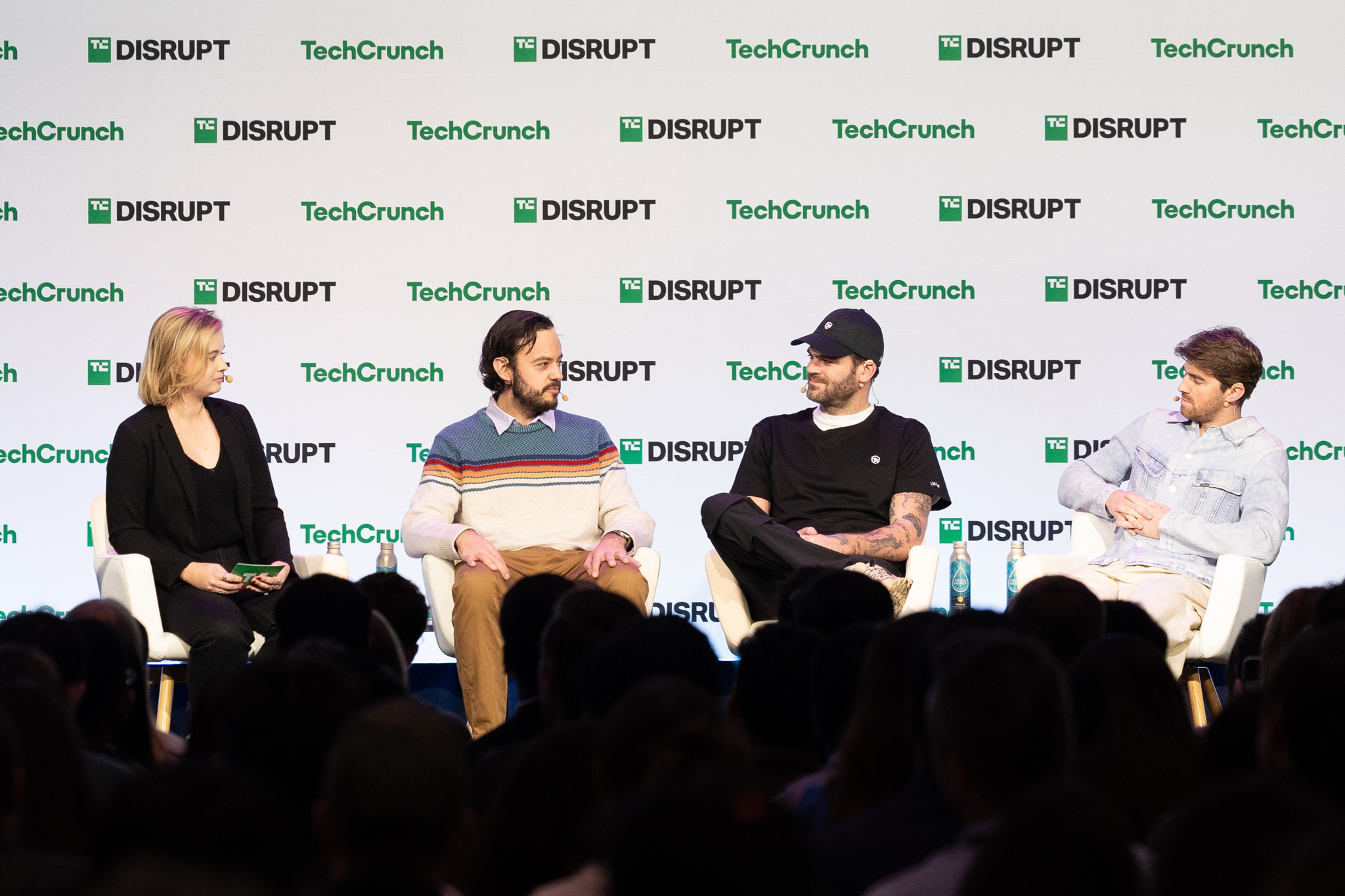
The growth of AI companies has intensified hiring and retention challenges across the entire tech sector. Founders are competing for specialized engineering talent while navigating secondary sales and shifting employee expectations. Compensation structures, equity packages, and cultural strategy have become central to survival at early stages.
Matt Birnbaum of Wylder.co, Ioana Hreninciuc of Runware, and Atli Thorkelsson of Redpoint Ventures will examine how companies are adapting compensation, culture, and team-building strategies as market dynamics shift. The underlying challenge is that incentives and expectations are evolving rapidly, requiring companies to rethink their human infrastructure.
Hybrid Teams and AI Agents
Early-stage companies are now hiring AI to perform engineering, support, and operations work. A session will explore how founders decide what humans should own versus what gets delegated to agents. The question has practical urgency: how do teams maintain accountability, culture, and speed when part of the organization is software rather than people? The conversation will address the operational playbook for hybrid teams, separating what works from what creates organizational friction.
Redesigning Products for AI Capabilities
The pace of AI model evolution has outstripped any single vendor’s roadmap. Product leaders are now orchestrating across multiple foundation models rather than betting on one. Leaders from Reddit, Square, and Uber will discuss how they redesign products used by millions for AI capabilities. What do users actually want? And where should product teams resist the temptation to automate everything?
A parallel session will focus on multi-model orchestration as an architectural pattern. Successful AI product teams evaluate new models constantly, manage cost and reliability at scale, and build products that can evolve as quickly as the underlying technology. Separately, Greenfield Partners’ Shay Grinfeld will sit down with founders building across emerging AI areas—agents navigating the open web and completing work, AI systems taking on ambitious research, intelligent machines operating beyond the screen. Greenfield will also reveal its 2026 AI Disruptors 60, spotlighting companies it believes are pushing AI into new territory.
Acquisition as an Outcome, Multi-Product as a Flywheel
Many founders today design for acquisition as a legitimate exit path alongside IPOs. Karl Alomar of M13 and Lindsey Mignano of Mignano Law Group will discuss how this mindset reshapes product strategy and partnership decisions. The implication is that founders who view M&A as a possibility from day one make different technical and positioning choices.
Another session will address a common pattern: startups stall because they build one excellent product rather than a repeatable system. Speakers will outline operational playbooks for capital allocation, systemizing internal innovation, and engineering a compounding second act before the core product’s growth curve flattens. The difference between success and plateau often comes down to whether founders see a single product as the endpoint or as the foundation for a multi-product engine.
Product-Market Fit Signals in an AI Hype Cycle
In an environment saturated with AI excitement, product-market fit signals are easier to fake and harder to verify. Founders often mistake early excitement, usage spikes, and pilot wins for durable traction. Speakers will break down what false product-market fit actually looks like and how operators and investors separate real retention from hype-driven adoption.
Robby Stein, VP of Product at Google, will sit down in a fireside conversation to discuss product decision-making at scale. The instincts that work for zero-to-one can fail at billion-user scale. How do product teams at large organizations balance speed with trust and innovation with reliability? The conversation will be grounded in the realities of updating systems that impact billions of users.
The Psychological Reality of Founder Scaling
Company building is psychologically demanding in ways founder narratives typically understate. A session will unpack the hidden costs of high-growth environments: burnout, decision fatigue, and the identity strain of sustained pressure. Speakers will share systems, habits, and mental frameworks that help leaders endure and perform at a high level.
Separately, Zach Yadegari will discuss how Cal AI navigated rapid viral growth, product pressure, and the realities of building in a distribution-driven market. The session will address how founders translate breakout attention into durable retention and long-term company building. The span between a viral moment and a sustainable company is where many founders stumble.
At zero-to-one, customer acquisition does not depend on marketing spend, brand recognition, or organizational scale. Nell Daly of Revenge Capital, David H. Rosmarin of Harvard Medical School, and Jack Withinshaw of Airspeeder will discuss founder-led distribution, community building, product-led growth, and word-of-mouth momentum.
The Startup Battlefield judges will hold a debrief on the trends and founder qualities that stood out this year. Stacy Brown-Philpot of Cherryrock Capital, Chi-Hua Chien of Goodwater Capital, Dayna Grayson of Construct Capital, Carter Reum of M13, and Alexa von Tobel of Inspired Capital will unpack what resonated. The conversation will address what happens after the spotlight fades and how companies maintain momentum in the critical 12 months following a major launch, funding round, or Startup Battlefield appearance. Founders will also have the opportunity to ask these investors their toughest questions in an audience-led Q&A.
Frequently Asked Questions
When and where is TechCrunch Disrupt 2026?
TechCrunch Disrupt 2026 takes place October 13-15 at Moscone Center in San Francisco.
What is the Builders Stage?
The Builders Stage is one of six industry-focused programming tracks at Disrupt 2026, dedicated to practical sessions on fundraising, hiring, go-to-market execution, and company scaling. Early-bird tickets offer up to $330 in savings.
What is the main theme of the Builders Stage?
The stage emphasizes that execution fundamentals, efficient growth, and disciplined operations matter more than AI hype alone. Sessions cover defensibility amid AI competition, capital strategy, hiring in the AI talent war, multi-model product architecture, and founder mental health during scaling.
