

Key takeaways
- NTangible developed a psychological assessment that scores athletes from 0 to 1000 on clutch performance, claiming those scoring above 750 are twice as likely to commit to Division I schools.
- TechCrunch's reviewer discovered athletes can artificially inflate their scores by answering dishonestly, raising fundamental questions about whether the test measures genuine resilience or simply the ability to portray mental toughness.
- The startup plans to expand beyond sports through NTerpret, a parallel assessment for corporate HR departments to evaluate how employees perform under workplace pressure.
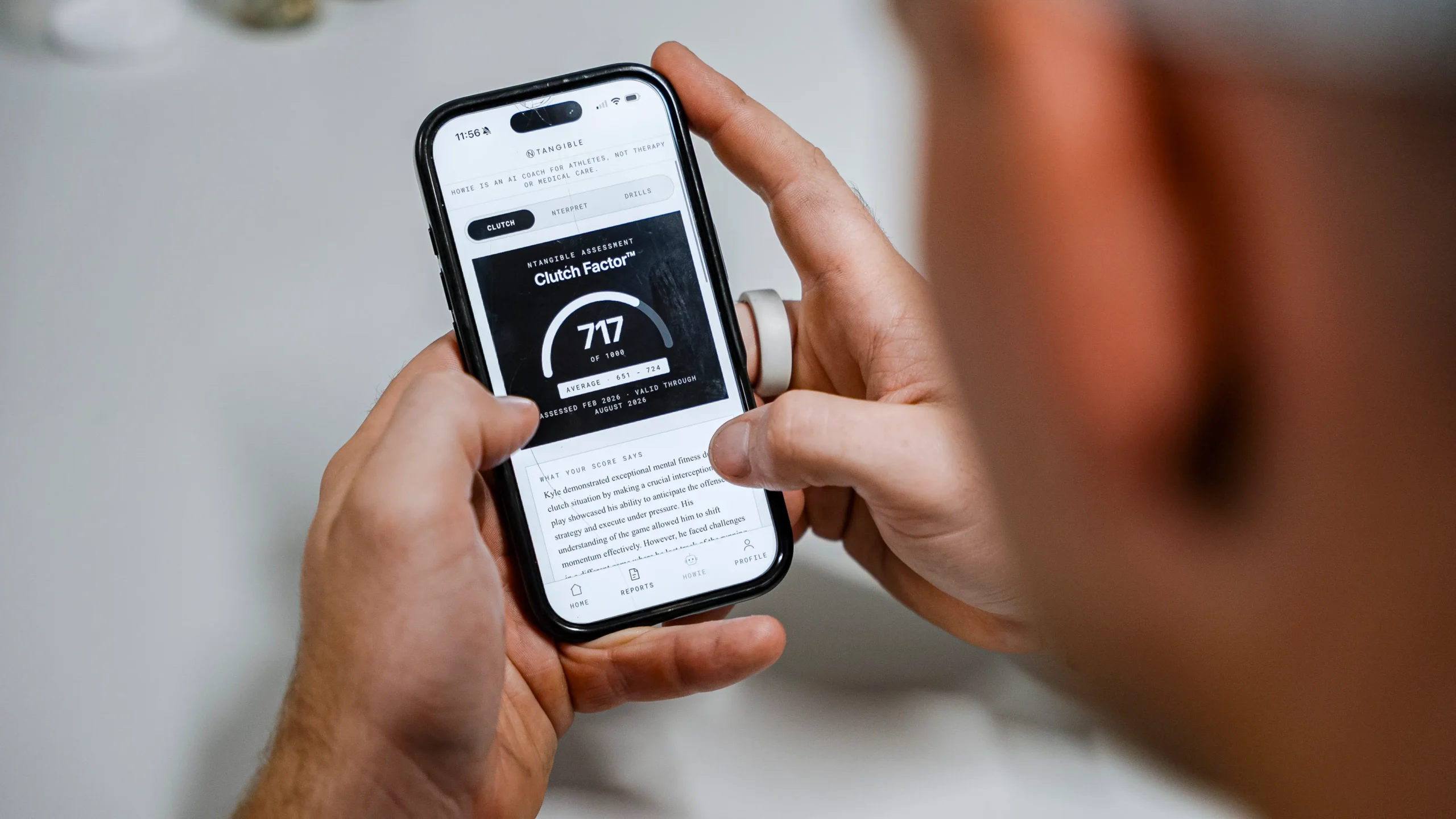
When collegiate sports programs evaluate potential recruits, the assessment rubric is straightforward. Coaches measure sprint speed, throwing velocity, vertical leap, body composition, and countless other physical attributes. The challenge lies in evaluating the psychological dimension: will this athlete execute when the pressure is greatest? Will they remain composed during final moments of a championship game, or will anxiety derail their performance? NTangible, a startup competing at TechCrunch Disrupt 2026, believes it has found a way to answer these questions. The company developed the Clutch Factor, a psychological assessment designed to quantify an athlete’s likelihood of performing successfully under extreme pressure.
The Foundation
Dan Connerty, a professional baseball player turned sports-tech entrepreneur, co-founded NTangible with Dr. Ed Levine, a psychologist and professor emeritus at the University of South Florida. Their collaboration produced the Clutch Factor assessment, a test that draws from decades of psychological research.
Roots in Established Psychology
The assessment builds on the Thematic Apperception Test (TAT), a psychological evaluation tool developed in the 1930s. The TAT operates on a straightforward principle: test-takers view ambiguous images and describe what they observe, imagine their own role within the scene, and speculate about future outcomes. Because the images are intentionally ambiguous and there are no “correct” answers, the test reveals patterns in language, thought processes, and self-perception.
Connerty explained to TechCrunch that this methodology allows for meaningful analysis of linguistic patterns rather than right-or-wrong answers. “The key words that you use, the way in which you use those words, and the semantic phrasing associated with it get scored against the neurolinguistic scoring guide that psychologists created, and it shoots out your clutch factor score,” he said.
From Assessment to Prediction
The Clutch Factor produces a score between 0 and 1000. According to Connerty, athletes scoring above 750 are twice as likely to commit to Division I programs, a correlation he positions as evidence that the assessment captures psychologically relevant traits predictive of athletic success at the highest levels.
Application in Recruiting
Collegiate athletics currently operates in a transformed economic landscape. Following NCAA rules changes around name, image, and likeness (NIL), programs can now offer direct financial compensation to athletes, sometimes exceeding $4 million for elite quarterbacks. In this context, Connerty argues that the Clutch Factor offers tangible value to recruiting departments.
He described multiple uses for the score: informing recruiting conversations, influencing athletic rankings and leaderboards, shaping NIL negotiations, and determining scholarship awards. Programs seeking any advantage in identifying athletes likely to perform in critical moments find appeal in a quantified measure of psychological resilience.
A Fundamental Vulnerability
The assessment contains a critical flaw: athletes can artificially inflate their scores by answering dishonestly. TechCrunch’s reviewer tested this directly. When they completed the assessment truthfully—including admitting to anxiety during high-stakes moments in high school sports—they scored 584, below average. When they retook the test while responding as they imagined an elite, composed recruit would answer, their score jumped to 802.
The Self-Reporting Problem
This self-reporting bias raises essential questions about what the Clutch Factor actually measures. Does it quantify genuine psychological resilience, or does it simply measure how convincingly someone can portray mental toughness to an evaluator? The problem becomes particularly acute when athletes understand that their scores influence recruitment outcomes and financial compensation.
Connerty acknowledges that clutch performance is trainable rather than fixed. He worked with Howie Schwartz, a former sports psychologist for Major League Baseball, to compile mental training exercises athletes can use to strengthen psychological resilience under pressure. However, NTangible functions primarily as a measurement platform, not as a training intervention.
Expanding Beyond Sports
While Connerty’s baseball background initially directed the company toward athletics, NTangible now supports assessment across nine sports. More broadly, Connerty envisions exporting the framework to corporate environments, where organizations want to understand how employees perform under pressure.
To serve this market, the company developed a complementary assessment called NTerpret. Rather than measuring clutch athletic performance, NTerpret asks employees to reflect on how they respond to coaching and feedback. The test generates data revealing how workers process instructions and act on information in high-pressure situations. In theory, HR departments could use NTerpret to identify which employees thrive under stress and which might struggle.
The Road to Revenue
NTangible ranks among the top 20 companies competing in TechCrunch Disrupt’s Startup Battlefield competition, taking place October 13 through 15 in downtown San Francisco. Connerty will pitch the company’s strategy on stage, focusing on what he views as the most viable path: selling directly to sports organizations, athletic departments, and companies, rather than marketing to individual athletes.
The company’s success will depend on resolving the self-reporting bias problem and demonstrating that Clutch Factor scores maintain predictive validity in actual recruiting and hiring contexts. Until NTangible can address how athletes and employees game the system, the assessment remains more useful as a framework for coaches and managers to deepen their understanding of their personnel rather than as a definitive measure of clutch performance.
Source: TechCrunch
Frequently Asked Questions
How does the Clutch Factor assessment work?
The test draws from the Thematic Apperception Test, where athletes view ambiguous images and describe what they see, imagine their role, and predict outcomes. Their word choice and phrasing are scored using a neurolinguistic guide to produce a score between 0 and 1000.
What are the main limitations of the Clutch Factor?
Athletes can game the system by answering dishonestly. TechCrunch's reviewer scored 584 when answering truthfully but 802 when answering as they imagined an elite recruit would, raising questions about whether the test measures genuine psychological resilience or simply the ability to present oneself favorably.
How does NTangible plan to make money?
Rather than marketing to individual athletes, the company plans to sell directly to sports organizations, athletic departments, and corporations. It also developed NTerpret, a parallel assessment for workplace HR departments to evaluate how employees perform under pressure.
